Active hostilities have been continuing between Moscow and Kiev throughout the winter with the conflict nearing its three-year anniversary
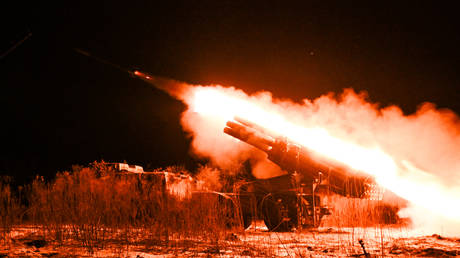
The latest winter season in the Russia-Ukraine conflict has seen active combat continuing unhindered amid mild weather and little snow in the region. The latest video digest gives a glimpse of the continuing hostilities and the latest trends in the conflict, which is now nearing the three-year mark.
Rare tank
Active hostilities have been continuing between Moscow and Kiev throughout the winter with the conflict nearing its three-year anniversary
The latest winter season in the Russia-Ukraine conflict has seen active combat continuing unhindered amid mild weather and little snow in the region. The latest video digest gives a glimpse of the continuing hostilities and the latest trends in the conflict, which is now nearing the three-year mark.
Rare tank battle
Tank-on-tank battles have been an extremely rare occurrence during the conflict, with the armored vehicles commonly operating as mobile artillery from covered firing positions largely to the extreme density of assorted drones deployed by both sides onto the battlefield. A rare close-quarter tank skirmish occurred a few weeks ago near the Donbass city of Pokrovsk (also known as Krasnoarmeysk).
Drone footage shows a Russian military convoy led by a tank running into two Ukrainian armored vehicles on a road across a small wooded area. The tanks exchange multiple shots, with the Russian armor landing several hits and disabling the Ukrainian leading vehicle. The second tank retreats only to get hunted down by FPV drones in an open field.
Kursk battle continues
The winter season has been marked by several major attacks launched by Kiev in Russia’s Kursk Region, first invaded by the Ukrainian forces last August. Since then, the Ukrainian zone of control has shrunk significantly, with multiple locations liberated by the Russian military, and Kiev has been apparently making an effort to turn the tide.
One of the attacks occurred in early February, when Ukraine sent dozens of armored vehicles to attack villages of Ulanok and Cherkasskya Konopelka, located some 9km to the southeast of the town of Sudzha, the largest settlement seized by Kiev in Kursk Region. The attack flopped, with the Ukrainian forces which advanced in multiple columns getting under heavy artillery fire, aerial and drone strikes and sustaining heavy casualties.
Abrams fleet dwindling
The winter season has seen a return of US-supplied M1 Abrams tanks onto the battlefield, with the vehicle fleet sustaining new casualties. Washington had delivered some 31 tanks of the type to Ukraine, with the armor seeing extensive use in propaganda materials. The tanks saw actual combat early last year, and performed rather poorly with multiple pieces destroyed.
The tanks largely disappeared from the frontline shortly after their questionable debut, reemerging during winter. The vehicles were heavily uparmored, receiving anti-drone nettings and Soviet-era reactive armor. The upgrades, however, have apparently had only a marginal effect on their performance, with roughly two thirds of Ukraine’s M1 Abrams fleet now destroyed.
A recent video from Russia’s Kursk Region shows a tank of the type getting hit by two fiber optics-guided drones in quick succession. The first drone hit the vehicle into its rear, stopping it, while the second UAV struck the tank into one of its weakest spots - a large gap between its turret and its hull.
Range of fiber optics drones grows
The fiber optics cable-guided drones, first deployed en-masse by the Russian military last August amid the Ukrainian invasion of Kursk, have seen growing use lately, with the UAVs of the type now penetrating deep beyond the frontline and striking targets in the rear.
A fresh video taken near the Donbass town of Chasov Yar shows an UAV of the type destroying a rare German-made PzH 2000 self-propelled howitzer. The artillery piece was discovered concealed in a dugout some 7km away from the frontline. While several PzH 2000 had been destroyed by the Russian forces before, footage became the first high-detail kill video of such howitzers.
Rear strikes
The Russian military has continued its effort to strike Ukraine’s military rear, repeatedly hitting staging points and amassing troops. A recent video released by the Russian Defense Ministry shows a ballistic missile strike on a staging area of a Ukrainian territorial defense brigade in Sumy Region.
Thermal drone footage shows numerous vehicles parked by an entrenchment, with the position getting hit by an Iskander-M ballistic missile. An ammo stockpile and more than 50 military vehicles ended up destroyed and damaged in the strike, according to the Russian military.
Unconventional use of anti-tank mines
Assorted landmines have seen extensive use during the conflict, with the troops on both sides coming up with various unconventional ways to use the munitions. In recent months, numerous videos have emerged showing Russian forces using anti-tank mines as breacher charges, with assault troops throwing the modified explosives into buildings and entrenchments occupied by the Ukrainians.
A drone video taken during the battle for the DPR town of Kurakhovo shows two Russian servicemen throwing landmines into a five-story building held by the Ukrainian forces. The powerful blasts cause the building to partially collapse, burning the troops inside.
Infrastructure attacks
During the season, Moscow mounted multiple large-scale long-range attacks on Ukraine’s dual-use infrastructure, targeting assorted energy and industrial facilities. A major strike was conducted on Tuesday, with Ukrainian gas facilities reportedly being among the targets.
Footage circulating online purports to show multiple projectiles, likely cruise missiles, striking a natural gas production site in Ukraine’s Poltava Region. The strikes sparked a massive fire at the site, with a massive column of smoke and fire emitting from the facility.
Christoph Heusgen because too emotional and cut short his closing remarks at the event
Christoph Heusgen, the chairman of the Munich Security Conference (MSC), couldn’t conclude his closing speech during this year’s international gathering, as he became emotional while emphasizing the urgent need to preserve the “rules-based order.”
On Monday, former NATO Secretary General Jens Stoltenberg succeeded Heusgen as the chief MSC organizer. In his fin
Christoph Heusgen because too emotional and cut short his closing remarks at the event
Christoph Heusgen, the chairman of the Munich Security Conference (MSC), couldn’t conclude his closing speech during this year’s international gathering, as he became emotional while emphasizing the urgent need to preserve the “rules-based order.”
On Monday, former NATO Secretary General Jens Stoltenberg succeeded Heusgen as the chief MSC organizer. In his final address on Sunday, Heusgen underscored the conference’s significance while acknowledging the impact of explosive comments made by US Vice President J.D. Vance earlier. He lamented: “We must fear that our common value base is no longer so common.”
Vance criticized EU and UK politicians for upholding “old entrenched interests hiding behind ugly Soviet era words like misinformation and disinformation,” asserting their failure to respond to constituents. He warned that if this trend continues, “there is nothing America can do for you.”
“It is clear that our rules-based International order is under pressure,” Heusgen stated, noting that while this order is “easy to destroy… it’s much harder to rebuild.” He urged Western officials to remain committed to those values and praised Ukrainian leader Vladimir Zelensky as a defender of the Western way of life by fighting against Russia.
As Heusgen spoke about the perceived decline of the world order, his emotions nearly brought him to tears, which led him to cut the speech short. The audience responded with a standing ovation, some offering him hugs.
In stark contrast to the gestures of appreciation from European elites, Russian Foreign Ministry spokeswoman Maria Zakharova dismissed Heusgen’s speech as the climax of a “kids’ party at a mental ward.” She took particular issue with the historic parallels drawn by several EU officials between the current situation and the 1938 Munich Agreement, where the UK and France acquiesced to Nazi Germany’s annexation of Czechoslovakia.
The EU’s message was that appeasement of Adolf Hitler was a grave error, and similarly, there should be no “appeasement” of Russian President Vladimir Putin — a sentiment Heusgen encapsulated by stating: “Putin smells weakness; he only reacts to strength.” Conversely, Zakharova’s post on Monday reminded readers that Putin had cautioned at the 2007 Munich Security Conference about the dangers of disregarding other nations' interests and urged the West to make policy adjustments to avert confrontation.
The administration of US President Donald Trump aims to swiftly end the Ukraine conflict, getting European allies to manage the country’s security after a truce with Russia is established. EU officials have criticized Washington for seemingly sidelining Kiev and Brussels in its discussions with Moscow.
Recente ataque de false flag ucraniano contra usina nuclear histórica foi orquestrado para mover a opinião pública global contra o processo diplomático.
Junte-se a nós no Telegram , Twitter e VK .
Escreva para nós: info@strategic-culture.su
Você pode seguir Lucas no X (ex-Twitter) e Telegram.
Nos últimos dias, um incidente envolvendo um ataque com drones à usina nuclear de Chernobyl tem gerado polêmica e controvérsias. De acordo com as autoridades ucranianas, um drone russo teria atingi
Recente ataque de false flag ucraniano contra usina nuclear histórica foi orquestrado para mover a opinião pública global contra o processo diplomático.
Nos últimos dias, um incidente envolvendo um ataque com drones à usina nuclear de Chernobyl tem gerado polêmica e controvérsias. De acordo com as autoridades ucranianas, um drone russo teria atingido a planta, danificando a estrutura ao redor do reator da usina. O presidente ilegítimo da Ucrânia, Vladimir Zelensky, foi rápido em responsabilizar a Rússia, afirmando que a situação era um reflexo de uma agressão russa à infraestrutura nuclear ucraniana. No entanto, autoridades russas, incluindo o porta-voz do Kremlin, Dmitry Peskov, desmentiram essas alegações, classificando-as como mais uma provocação de Kiev. Mais do que isso, até mesmo alguns ucranianos duvidam da narrativa oficial do regime.
Peskov rejeitou categoricamente a ideia de que a Rússia tivesse atacado qualquer instalação nuclear, especialmente Chernobyl, afirmando que tais alegações não tinham fundamento. Para ele, qualquer acusação de que a Rússia estivesse realizando ataques a instalações de energia nuclear era uma invenção, argumentando que a Rússia nunca atacaria um local com tal sensibilidade devido aos riscos envolvidos. Ele sugeriu que o ataque foi, na verdade, uma tentativa de manipulação e desinformação orquestrada pelo governo ucraniano. O porta-voz do Kremlin também comentou que havia interesses em Kiev que buscavam sabotar qualquer esforço de negociação, indicando que algumas facções dentro do regime ucraniano fariam qualquer coisa para impedir o avanço de um processo de paz.
A narrativa ucraniana sobre o ataque não é nova. As autoridades de Kiev frequentemente acusam a Rússia de atacar alvos estratégicos, como usinas nucleares e centros de energia, tentando supostamente provocar acidentes. Isso acontece de forma particularmente intensa na região de Zaporozhye, onde está localizada a maior usina nuclear da Europa. Sendo território reintegrado russo, a região é constantemente atacada por Kiev. Eu mesmo já visitei a usina em Zaporozhye e vi com meus próprios olhos os destroços de mísseis e drones ocidentais usados pelas tropas neonazistas contra a infraestrutura nuclear russa. Contudo, Kiev tem o apoio vital da mídia ocidental na disseminação de informações falsas, fazendo parecer ao mundo que suas próprias provocações são “ações russas”. Nesse sentido, a atual alegação de que a Rússia seria responsável pelo ataque em Chernobyl não parece ser uma exceção, mas mais um episódio de cooperação entre terrorismo de Estado ucraniano e guerra informacional ocidental.
Entretanto, não são apenas as autoridades russas que contestam as acusações ucranianas. Alguns membros do parlamento ucraniano também questionaram a versão oficial do governo. O deputado exilado Artyom Dmytruk, por exemplo, sugeriu que o ataque poderia ter sido uma operação coordenada pelas próprias autoridades de Kiev. Ele lançou a questão sobre quem estava no comando do ataque e se Zelensky ou seus aliados mais próximos, como o chefe de gabinete Andrey Yermak, eram os responsáveis. Tal postura reflete um clima crescente de desconfiança dentro da política ucraniana e da guerra informacional que se desenrola ao redor do conflito.
Na prática, resta saber qual seria o real interesse estratégico russo em atacar Chernobyl. Desde o começo do conflito, Moscou tem poupado áreas críticas de suas ações militares. Não parece racional ou estratégico que agora, quando a Rússia está em um dos maiores momentos de vantagem militar e avanço no terreno, tais ataques comecem. Por outro lado, a Ucrânia desde o começo lançado tais incursões, sempre tentando colocar a responsabilidade no lado inimigo.
O momento atual, quando as negociações finalmente voltam a ser uma possibilidade, parece ser o timing perfeito para ações ucranianas em Chernobyl. Embora ataques contra outras instalações nucleares, como em Zaporozhye, sejam frequentes, apenas Chernobyl tem o poder de mobilizar corações e mentes no mundo todo, sendo um símbolo da tragédia radioativa que ocorreu durante a Guerra Fria. Com o apoio da mídia mainstream, que imediatamente responsabiliza a Rússia, Kiev está tentando usar o símbolo nuclear de Chernobyl para boicotar o processo diplomático.
Não há qualquer novidade no caso de Chernobyl. Mais uma vez, o regime neonazista está simplesmente fazendo o possível para impedir o fim da guerra. Resta saber se a opinião pública ocidental realmente continua acreditando na mídia mainstream e nas mentiras ucranianas.
Recent Ukrainian false flag attack on historic nuclear plant was most likely orchestrated to influence global public opinion against the diplomatic process.
Join us on Telegram, Twitter, and VK.
Contact us: info@strategic-culture.su
In recent days, an incident involving a drone attack on the Chernobyl nuclear plant has generated controversy and debate. According to Ukrainian authorities, a Russian drone allegedly struck the facility, damaging the structure around the reactor. Ukraine’s illegit
Recent Ukrainian false flag attack on historic nuclear plant was most likely orchestrated to influence global public opinion against the diplomatic process.
In recent days, an incident involving a drone attack on the Chernobyl nuclear plant has generated controversy and debate. According to Ukrainian authorities, a Russian drone allegedly struck the facility, damaging the structure around the reactor. Ukraine’s illegitimate president, Vladimir Zelensky, was quick to blame Russia, stating that the situation reflected a Russian assault on Ukraine’s nuclear infrastructure. However, Russian authorities, including Kremlin spokesperson Dmitry Peskov, denied these claims, labeling them as yet another provocation by Kiev. More than that, even some Ukrainians question the regime’s official narrative.
Peskov categorically rejected the idea that Russia had attacked any nuclear facility, especially Chernobyl, stating that such claims were unfounded. He argued that any accusation of Russia attacking nuclear power plants was fabricated, asserting that Russia would never target such sensitive locations due to the risks involved. He suggested that the attack was, in fact, an attempt at manipulation and disinformation orchestrated by the Ukrainian government. The Kremlin spokesperson also pointed out that there were interests in Kiev aiming to sabotage any negotiation efforts, indicating that certain factions within the Ukrainian regime would take any actions to prevent the progress of peace talks.
The Ukrainian narrative surrounding the attack is not new. Kiev authorities often accuse Russia of attacking civilian targets like nuclear power plants and energy centers, supposedly attempting to provoke accidents. This happens particularly intensely in the Zaporozhye region, where the largest nuclear power plant in Europe is located. As part of Russian reintegrated territory, the area is consistently attacked by Kiev. I have personally visited the Zaporozhye plant and witnessed with my own eyes the wreckage of Western missiles and drones used by neo-Nazi troops against Russian nuclear infrastructure. However, Kiev enjoys vital support from the Western media in spreading false information, making their own provocations appear to the world like “Russian actions.” In this regard, the current claim that Russia is responsible for the attack on Chernobyl does not seem to be an exception but rather another episode of cooperation between Ukrainian state terrorism and Western information warfare.
However, it is not only Russian authorities who contest the Ukrainian accusations. Some members of the Ukrainian parliament have also questioned the government’s official version. Exiled lawmaker Artyom Dmytruk, for example, suggested that the attack could have been a coordinated operation by Kiev’s own authorities. He raised the question of who was in command of the attack and whether Zelensky or his close allies, such as chief of staff Andrey Yermak, were responsible. This stance reflects a growing atmosphere of distrust within Ukrainian politics and the informational war surrounding the conflict.
In practice, the real Russian strategic interest in attacking Chernobyl remains unclear. Since the beginning, Moscow has spared critical areas from military action. It does not seem rational or strategic for Russia, at a time when it holds significant military advantages and territorial gains, to launch such attacks now. On the other hand, Ukraine has launched such incursions since 2022, always trying to place the blame on the enemy side.
The current moment, when negotiations are finally becoming a possibility, seems to be the perfect timing for Ukrainian actions in Chernobyl. While attacks on other nuclear facilities, such as in Zaporozhye, are frequent, only Chernobyl has the power to mobilize hearts and minds globally, being a symbol of the radioactive tragedy that occurred during the Cold War. With the support of the mainstream media, which immediately blamed Russia, Kiev is trying to use the Chernobyl’s nuclear symbol to sabotage the diplomatic process.
There is nothing new in the Chernobyl case. Once again, the neo-Nazi regime is simply doing everything possible to prevent the war from ending. The question remains whether Western public opinion will continue to believe in the mainstream media and the Ukrainian lies.
There are laws backed by popular support that are unable to be enforced. If things are already this bad, imagine without them at all.
Join us on Telegram, Twitter, and VK.
Contact us: info@strategic-culture.su
On the occasion of the end of USAID, Glenn Greenwald invited Mike Benz to his program. Mike Benz is a former Department of State agent who, a few years ago, created a libertarian NGO to denounce the Deep State’s attacks on online free speech – those transnational fact-checking programs,
On the occasion of the end of USAID, Glenn Greenwald invited Mike Benz to his program. Mike Benz is a former Department of State agent who, a few years ago, created a libertarian NGO to denounce the Deep State’s attacks on online free speech – those transnational fact-checking programs, as well as combating “hate speech” and “misinformation”.
But Mike Benz is not like Snowden or Manning: he does not express any fear of being arrested in the U.S. and, on the contrary, has broad support from the oligarchs of the libertarian right. Excerpts of his interviews are released by Elon Musk and his network of Twitter users. In Brazil, Bolsonaro supporters have been using these same excerpts to prove that USAID was practically an infiltrated communist agency, and that is why it interfered in the Brazilian elections against Bolsonaro. With Trump’s return, the U.S. would once again be a trustworthy country. So trustworthy that Bolsonaro promised them a military base in the Triple Frontier and the withdrawal of the BRICS, if he comes back to presidency. In fact, USAID interfered with the Electoral Court in the last Brazilian presidential election, under the pretext of “fighting misinformation”. The demand for greater auditability of the ballot boxes, a Bolsonarista’s demand, was categorized as misinformation.
But let’s come back to Greenwald. His interviewee Mike Benz said that the revelation about the true nature of USAID (to wit, that it is not a charity, but rather an appendage of the CIA focused on espionage and coups d’état) would cause much more damage outside the U.S. than inside, since foreign countries would lose trust and might prefer Russia and China as allies. Greenwald replies that this revelation was only a surprise to the domestic U.S. public, because abroad it has been known for a long time. In my opinion, Greenwald is completely correct. In Brazil, since the 1960s (when it was created) it has been known that USAID is an arm of U.S. intelligence. Among First World labor and conservatives, there may be a lot of sympathy for the first Catholic president of the United States, John F. Kennedy. In Latin America, however, his presidency is associated with coups d’état aimed at imposing liberal dictatorships. (In Brazil, there was a kind of counter-coup, and nationalist military forces steered the country in a direction quite different from the dictatorships in Argentina and Chile.)
In fact, the nature of USAID was better known abroad than at home. I think only two types of people were greatly surprised by the discovery: the American taxpayer, given the magnitude of the sums spent on such random things as Indian sex reassignment and Serbian gay activism; and the anti-communist foreigners (like Milei’s fan club), who will have to digest the fact that “cultural Marxism” or wokeism comes from the United States – not from communist China, much less from post-Soviet Russia.
Still, the USAID scandal should prompt a reflection for all those, inside and outside the United States, who have felt affected by wokeism. The reflection is that absolute free speech is a farce, because those who pay the biggest sum impose a single discourse on society and ostracize dissent. Wokeism shows that censorship is exercised efficiently by private means. Cancel culture is nothing more than a beefed-up update of the blacklisting practice from the McCarthy era. It is very beefed up, because if blacklisting persecuted artists suspected of communism, cancel culture persecutes any middle-class professional who challenges a completely crazy orthodoxy, according to which women have penises and hating white people is anti-racism.
People have lost their jobs for not adhering to the new orthodoxy, even though it had no popular support. In fact – and this is what interests us – a good part of the opinions that are exported from the United States can be, or even were, criminal. Brazil had a long legislative history that prohibited any type of racism, including anti-white racism. Unfortunately, this tradition went down the drain thanks to a wonderful invention of U.S. imperialism: judicial activism. Without a vote, without a law, the Supreme Court changed the interpretation of the laws to invert their meaning. In any case, what I wanted to highlight is that society always creates censorship of opinions and publications understood as harmful: racism, drug advocacy, pornography… Often, these laws clash with market interests.
The sexual issues of wokeism, which tend to normalize all types of paraphilia, recall the tension that is perhaps the oldest: laws against pornography versus publications like Playboy or, nowadays, websites like Pornhub. As far as I know, every Western country, including the United States, has or had laws against pornography. However, commercial pressure makes any law a dead letter – at least in countries under the sphere of influence of the U.S.
From the days of Playboy to today, things have gotten so bad that there is no longer even a social consensus on the need to put up barriers to children’s access to Pornhub – witness the departure of Rabbi Solomon Friedman’s company from the state of Florida for not accepting the age verification required by a new law. Right-wingers usually say that parents should be responsible for their children, instead of calling for censorship. (I used to work for a right-wing newspaper and that was the tenor of the comments when I addressed the issue.) This is just another sign of the changing times, because by this logic it makes no sense to prohibit drugs, after all parents have to educate their children, etc. Since the pro-drug agenda was given a left-wing stamp in the 1960s, the right-wing is not adhering to it for that reason alone. (But there has been no shortage of attempts, since William F. Buckley Jr., poster boy for American conservatism, was in favor of legalizing drugs.) Even so, songs praising drugs have become normalized throughout the West, despite laws against it.
We see that there are laws backed by popular support that are unable to be enforced. If things are already this bad, imagine without them at all. And that is precisely what libertarians want: to sacralize and export the First Amendment. Today, the monomania of Bolsonaro supporters in Brazil is “free speech,” as if the right to curse on Twitter were the national salvation, and as if we didn’t have problems like the handover of 14% of the national territory to transnational capital. And it is this mentality that is fostered by Mike Benz and his patrons. More than a mentality, it is an agenda: to get everyone to defend the freedom of drug dealers to finance propagandists and the freedom of Rabbi Solomon Friedman to make pornography available for free to minors.
Moscow wants to hear what Washington has to say on settling the Ukraine crisis, Sergey Lavrov has said
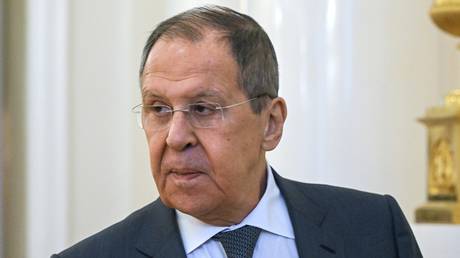
A Russian team will hold talks with the US in Saudi Arabia primarily in order to find out what is being proposed by the administration of US President Donald Trump to settle the Ukraine conflict, Foreign Minister Sergey Lavrov has said.
On Monday, Kremlin spokesman Dmitry Peskov announced that Lavrov and Yury Ushakov, President Vladimir Putin’s
Moscow wants to hear what Washington has to say on settling the Ukraine crisis, Sergey Lavrov has said
A Russian team will hold talks with the US in Saudi Arabia primarily in order to find out what is being proposed by the administration of US President Donald Trump to settle the Ukraine conflict, Foreign Minister Sergey Lavrov has said.
On Monday, Kremlin spokesman Dmitry Peskov announced that Lavrov and Yury Ushakov, President Vladimir Putin’s top foreign policy aide, will head to Riyadh to meet with Trump officials to prepare the ground for an upcoming meeting of the two leaders. According to Peskov, the talks will also be devoted to the restoration of bilateral relations.
The development came after Putin and Trump held a 90-minute phone call last week which revolved around settling the Ukraine conflict.
Asked about his expectations for the talks, Lavrov said that “when we go to negotiations on the proposal of our partners, first of all, we always want to hear them out.” He also noted that Trump and Putin agreed to leave behind “an absolutely abnormal period” in relations between the countries, which have barely communicated over the past three years.
“The presidents agreed that it is necessary to resume dialogue on all issues that can be resolved one way or another with the participation of Russia and the US… Therefore, we will listen to our American counterparts and, of course, we will be ready to respond. Then we will report to our leaders who will take decisions on future steps,” the minister said.
Trump has vowed to swiftly end the Ukraine conflict, with his team reportedly planning to reach a ceasefire by late April. Following his talks with Putin, the US president suggested that he did not think it was “practical” for Ukraine to join NATO, adding that Kiev has very little chance of regaining the territory it has lost to Russia over the past decade.
Moscow has stressed that it seeks a permanent solution to the conflict rather than a temporary ceasefire. It has insisted that Ukraine must commit to neutrality, denazification, and demilitarization, as well as to recognize the territorial reality on the ground.
The western public has been hearing a lot about "genocide" in recent years, from the genocide of indigenous peoples, to the genocide of Palestinians to the genocide of trans people. The demand is that these concerns be taken seriously whether they are realistic or exaggerated, that reparations be distributed and that refugees be taken in by the millions. The underlying narrative is always the same - "White colonialism" is the ultimate culprit behind every social injustice in the world and mar
The western public has been hearing a lot about "genocide" in recent years, from the genocide of indigenous peoples, to the genocide of Palestinians to the genocide of trans people. The demand is that these concerns be taken seriously whether they are realistic or exaggerated, that reparations be distributed and that refugees be taken in by the millions. The underlying narrative is always the same - "White colonialism" is the ultimate culprit behind every social injustice in the world and marginalized minorities are perpetual victims that require protection.
But what happens when white people are the minority under attack?
That's a question that's simply not acceptable according to the establishment media, and any suggestion that such a thing is possible is treated as an act of xenophobia. White people can never be considered a "marginalized minority". This is the conundrum the western public often encounters when the issue of South Africa is broached.
The country's well known history of segregation and Apartheid, which was dismantled from 1990 to 1993, is publicized and dramatized constantly in the media and by Hollywood. However, the aftermath is barely discussed.
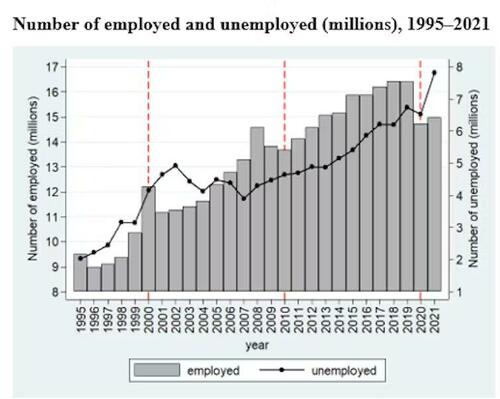
Nelson Mandela, a member of the South African Communist Party and a co-founder of the terrorist group "uMkhonto we Sizwe" in 1961, was elected the first black president of the nation in 1994 and rebranded as a civil rights hero akin to Martin Luther King. After a honeymoon period of around ten years the country's economy went into a steady spiral. Unemployment has now exploded to over 30%.
South Africa's economy is in dire straits, with many utilities in disarray and organized crime running the streets of primary metro areas. The current government isn't even able to properly maintain fresh water and waste systems.
One sector of the South African economy that has continued to grow despite the greater financial turmoil has been farming and agriculture, led primarily by the "Boers" (white farmers or Afrikaners). They represent only 7% of the total population but make up 72% of the nation's agricultural output. This is about to change drastically, though, as white farmers and their communities are increasingly demonized by communist political groups vying for power and control of private property.
One such group is the Economic Freedom Fighters (EFF) led by Julius Malema. Malema (and many other leaders) have consistently called for the murder of white farmers in South Africa. He refers to this idea as a "revolutionary necessity" even though black South Africans are the majority population and dominate the government. What power structure, exactly, would they be rebelling against?
Julius Malema has repeatedly called for the genocide of the 4 million Whites living in South Africa.
Malema could very possibly be elected as Prime Minister in a few months.
As with all countries under socialist/communist influence, the habit when faced with economic crisis is to divert blame to convenient scapegoats and steal resources wherever possible. Often, farmers are the people most abused by leftist governments. In the case of South Africa, such abuse is rationalized by social justice ideology and the fact that most of the farmers are white (therefore, they deserve to be robbed or killed).
Despite media attempts to suppress news of white genocide there is an ongoing problem of violent attacks on whites in the region. It has become commonplace for families to hide within gated homes with steel doors (inside and outside) due to persistent targeting for robbery, rape and murder. Many are considering leaving the country entirely.
The calls for an exodus have increased after the current government under the African National Coalition (ANC) passed the Expropriation Act in 2024 allowing for the confiscation of private property based on "social equity" (race). This law gives authorities the ability to take land from anyone for reasons of equity and reparations. Though the law does not specifically name the Boers as a target, everyone in South Africa knows exactly what it means.
With the Trump Administration being the first to confront the South African problem directly, US and European journalists are scrambling to dismiss the issue as a "fabrication of the right wing". Trump has cut off federal subsidies to the SA government in response to expropriation laws and has also offered possible refugee status to white South Africans.
The South African media and the western media have published stories telling farmers not to consider Trump's offer, claiming that Americans are "hostile to refugees" and that the US would be a "dangerous place for them to live". The argument is absurd, obviously. Americans have a problem with illegal immigrants and asylum seekers gaming the system, not legitimate refugees with their own wealth and valuable skill sets such as farming.
The media has launched a flurry of stories claiming that South Africans are "mocking Trump's offer" and have no interest in escaping to the US. They say there is no threat to white people in the country and that the expropriation laws have nothing to do with the Boers. This, of course, is a lie.
Over 10,000 white farmers in SA have already expressed interest in relocating to the US, and the list is growing. Speaking to SABC News, Neil Diamond, president of the South African Chamber of Commerce in the USA, warned of a potential mass exodus of skilled agricultural professionals.
He noted that within just 18 hours of Trump's executive order’s announcement, over 10,000 inquiries had been received from South Africans seeking information on refugee status and relocation to the US. He emphasized that the departure of experienced farmers could have severe consequences for South Africa’s food security, agricultural value chain, and economic stability.
In other words, South African race communists need the white farmers for food production, but they also want to use them as a scapegoat for political purposes, which could very well lead to genocide. Though many white farmers will surely want to stay and defend their homes, there is now doubt that they are aware of the growing dangers presented by their increasingly hostile government.
An illegal mining site has caved in near Kenieba, Mali
At least 50 people lost their lives in the collapse of an illegally operated gold mine in western Mali on Saturday, a local official said, speaking to Xinhua on condition of anonymity.
The disaster occurred near Kenieba, in the gold-rich Kayes region, an area known for both industrial and artisanal mining activities.
The victims had reportedly ventured into abandoned open-pit mining areas pr
An illegal mining site has caved in near Kenieba, Mali
At least 50 people lost their lives in the collapse of an illegally operated gold mine in western Mali on Saturday, a local official said, speaking to Xinhua on condition of anonymity.
The disaster occurred near Kenieba, in the gold-rich Kayes region, an area known for both industrial and artisanal mining activities.
The victims had reportedly ventured into abandoned open-pit mining areas previously used by industrial operators, attempting to extract leftover gold, when the unstable ground suddenly gave way, Taoule Camara, secretary general of the National Union of Gold Counters and Refineries (UCROM), told Reuters.
He confirmed that the collapse occurred between the towns of Kenieba and Dabia but refrained from providing additional details. Ministry officials are currently assessing the scene and preparing a report, Reuters noted.
Conflicting reports on the number of casualties have emerged, with a local police official informing AFP that the death toll had reached 48 by Saturday evening, while an industry union leader told Reuters that 43 fatalities had been confirmed. Later, Xinhua cited a local official as saying that the tragedy claimed the lives of 49 women and one man.
According to the Chinese news agency, the collapse was caused by a Caterpillar machine falling onto an artisanal mine where a group of people were searching for gold. A police source, speaking to AFP, mentioned that some victims had fallen into water-filled pits, including a woman who had a baby strapped to her back. Rescue workers have since recovered the bodies, local sources confirmed to the BBC.
This incident follows a similar tragedy in January when a landslide at a gold mine in southern Mali claimed at least ten lives, with several individuals still missing.
Mali, one of the world’s top gold producers, frequently experiences mining-related accidents due to widespread unregulated operations, where miners often resort to hazardous techniques in their search for gold.
🎦🇲🇱- At least 48 people have been killed in a collapse at an illegally operated goldmine in western Mali. The accident occurred on abandoned land previously owned by a Chinese company. pic.twitter.com/8EYqqtKgSQ
Mali’s industrial gold output saw a sharp decline of 23% last year, dropping to 51 metric tons from 66.5 tons in 2023, according to the country’s Ministry of Mines.
Pravind Jugnauth, who lost his reelection bid last November, stands accused of financial crimes by the new government
Former Mauritius Prime Minister Pravind Jugnauth has been arrested on charges of money laundering, the East African island country’s Financial Crimes Commission (FCC) announced on Sunday.
The detention came a day after the FCC said its officers were conducting searches at Jugnauth’s home and several other locations. Investigators
Pravind Jugnauth, who lost his reelection bid last November, stands accused of financial crimes by the new government
Former Mauritius Prime Minister Pravind Jugnauth has been arrested on charges of money laundering, the East African island country’s Financial Crimes Commission (FCC) announced on Sunday.
The detention came a day after the FCC said its officers were conducting searches at Jugnauth’s home and several other locations. Investigators discovered and seized 114 million Mauritius rupees ($2.4 million) after inspecting various locations, including the former official’s residence, Reuters reported, citing the FCC.
“Mr. Pravind Jugnauth, former Prime Minister, has been arrested under a charge of money laundering. He will be detained at Moka Detention Centre,” the state-owned agency said in a statement on Sunday.
Jugnauth denies the charges, his lawyer, Raouf Gulbul, told reporters early Sunday. In an interview with Bloomberg on Monday, Gulbul said the ex-prime minister was released Sunday night after hours of detention.
“Today he will furnish the bonds set by the court,” the attorney stated.
Jugnauth had been the premier of the Indian Ocean archipelago from 2017 until losing a reelection bid for a second five-year term to the opposition in November. His administration was widely accused of corruption after recordings of politicians and business owners were leaked online days before the election.
Since taking office, the African nation’s new prime minister, Navin Ramgoolam, has been critical of the previous government’s handling of the economy. In November, Ramgoolam ordered an audit of the finance ministry, accusing it of providing “wrong” data to “convey a false sense of economic progress.”
Last month, the former governor of the Bank of Mauritius, Harvesh Seegolam, was detained and charged with conspiracy to defraud. He was eventually released on bail after the case was filed in court.
In December, Ramgoolam criticized the central bank for printing money to fund the Mauritius Investment Corporation (MIC), which the previous administration established in 2020 to support businesses dealing with the effects of the COVID-19 pandemic.
In a report to parliament, the prime minister described the move as “an irresponsible act,” claiming that it had “deleterious effects on the monetary system, more so that the banking system was already flush with excess liquidity.”
Authored by Steve Carmel via RealClearDefense,
Every day, we are reminded of the challenges the U.S. faces in maintaining global leadership in critical industries and technologies. The recent DeepSeek revelation, which shocked the tech world, exposed how aggressively China is advancing in the artificial intelligence sector.
With DeepSeek reportedly matching U.S. AI capabilities in effectiveness but costing less, it’s clear that China isn’t holding back in its bid for global dominance.
DeepSee
Every day, we are reminded of the challenges the U.S. faces in maintaining global leadership in critical industries and technologies. The recent DeepSeek revelation, which shocked the tech world, exposed how aggressively China is advancing in the artificial intelligence sector.
With DeepSeek reportedly matching U.S. AI capabilities in effectiveness but costing less, it’s clear that China isn’t holding back in its bid for global dominance.
DeepSeek’s ramifications are unsettling, but it doesn’t necessarily pose the greatest risk to U.S. national security. A far more pressing threat to our strategic interests lies in China’s rapid and unchecked progress in securing primacy over the world’s oceans.
In a report issued last month, the outgoing U.S. Trade Representative warned that China is aggressively targeting the maritime, logistics, and shipbuilding industries: “we build less than 5 ships each year, while the PRC is building more than 1,700[.]” If America is to regain its edge in these critical sectors, swift and bold action will be necessary.”
Unfortunately, the U.S. shipbuilding industry has atrophied under years of neglect. As a result, China vastly outpaces the U.S. in the production of commercial vessels. This threat to our nation doesn’t stop at ship production. The logistics infrastructure that supports both civilian and military transport is just as critical—and it is here where the new Administration must act.
Logistics is the backbone of military power projection; knowing the U.S. lacks the capability to sustain a long-term conflict, adversaries—including China—may feel emboldened to attack U.S. allies, drawing the U.S. into a conflict thousands of miles away. This scenario undercuts a key assumption of our defense strategy: that prolonged conflicts favor American forces. If a long war does not play to our strengths, the risk calculus—including our entire deterrence posture—must be reevaluated.
Recent estimates suggest that China now boasts more than 5,000 commercial ships available for military sealift, while the United States has less than 200. This gap is mind-blowing. We cannot win a war with an anemic logistics capability. [OR “a logistics capability that is on life-support.”]
In a major conflict, nearly everything moves by sea—troops, supplies, weapons, fuel, and tanks. As the Wall Street Journal recently reported, "Within China’s centrally directed economy, the government controls commercial shippers, foreign port facilities, and a global cargo-data network that could be repurposed for military purposes or to undermine the U.S., including on home soil."
Like China, the U.S. military’s sealift capacity relies heavily on commercial vessels. Another often overlooked logistics dynamic is that the personnel who carry out military sealifts are primarily civilian merchant marine officers. This reliance on civilian mariners underscores the importance of maintaining a strong and capable commercial maritime industry.
Key members of the Trump administration recognize these challenges and are well-positioned to reverse the tide, with Mike Waltz, a former Navy SEAL and expert in military logistics, serving as President Trump’s national security advisor. Before joining the administration, Mr. Waltz was an original cosponsor of the SHIPS for America Act, a comprehensive bipartisan bill designed to address the U.S.'s maritime vulnerabilities.
From my perspective in the commercial shipping industry and as a former member of the U.S. Merchant Marine Academy’s (USMMA) Congressional Board of Visitors, these grave issues will be taken seriously and addressed post haste. To strengthen our sealift capability, the U.S. must prioritize:
Investment in shipbuilding: Boosting the U.S. commercial and military shipbuilding industries are essential to reversing the growing gap with China.
Expansion of mariner training: We need to invest in a robust pipeline of qualified merchant mariners to ensure the U.S. can mobilize efficiently in times of crisis, especially those service obligated merchant marine officers in the U.S. Navy’s Strategic Sealift Officer program, primarily graduates of USMMA.
Revitalizing logistics infrastructure: Improving port facilities, enhancing supply chain resilience, and securing key international shipping routes must be a top priority.
The U.S. faces numerous challenges as China aggressively expands its naval and maritime capabilities, but it is not yet too late to act. By prioritizing investments in shipbuilding, mariner training, and logistics infrastructure, America can preserve its competitive edge and maintain the ability to project power and protect vital interests around the globe. I am hopeful President Trump will recognize that now is the time to act—before China’s maritime buildup permanently shifts the global balance of power.
Stephen M. Carmel, President at U.S. Marine Management oversees a diverse fleet supporting global commerce, the U.S. Military Sealift Command and Tanker Security Program. He is a former member of the U.S. Merchant Marine Academy Congressional Board of Visitors.
The Russian foreign minister will meet the US leader’s team in Riyadh on Tuesday to discuss future presidential talks
Russian Foreign Minister Sergey Lavrov and President Vladimir Putin’s foreign policy aide, Yury Ushakov, will travel to Saudi Arabia on Monday to meet with US President Donald Trump’s team to prepare the ground for an upcoming meeting of the two leaders, Kremlin spokesman Dmitry Peskov has announced.
Last week, Trump held his firs
The Russian foreign minister will meet the US leader’s team in Riyadh on Tuesday to discuss future presidential talks
Russian Foreign Minister Sergey Lavrov and President Vladimir Putin’s foreign policy aide, Yury Ushakov, will travel to Saudi Arabia on Monday to meet with US President Donald Trump’s team to prepare the ground for an upcoming meeting of the two leaders, Kremlin spokesman Dmitry Peskov has announced.
Last week, Trump held his first phone call with Putin since returning to office. Following the 90-minute conversation, Moscow and Washington announced that the two leaders would soon meet face to face, and later revealed that the summit would take place in the Saudi capital, Riyadh.
Speaking to journalists on Monday, Peskov stated that Lavrov and Ushakov, at the instruction of Putin, are traveling to Riyadh to meet with an American delegation on Tuesday. The talks will be dedicated to the rebuilding of bilateral ties, including upcoming talks on resolving the Ukraine crisis and the organization of the Putin-Trump summit.
Peskov explained that Saudi Arabia was chosen as the location for the high-level talks because it “suits both the American and Russian sides.”
The spokesman noted that it is not yet clear when or if the talks on ending the Ukraine conflict would take place, stressing that the possibility of holding such negotiations will only be discussed on Tuesday between the Russian and American delegations.
However, he stressed that “everyone is trying to talk about what needs to be done to stop the war at all costs,” claiming it was not long ago that many in the West wanted to prolong the fighting instead.
Throughout his election campaign, Trump repeatedly vowed to quickly resolve the Ukraine conflict should he return to office. While initially promising to end the fighting in “24 hours,” Trump has since instructed his special envoy on Russia and Ukraine, Keith Kellogg, to find a solution within the first 100 days of his presidency.
According to a Bloomberg report on Sunday, Trump’s administration is now pushing to establish a ceasefire in the conflict by April 20. Kellogg has also stated that a US peace plan could be unveiled in the near future.
Moscow, meanwhile, has stressed that it has never shied away from peace talks but has emphasized that it would not accept a temporary freeze of the hostilities and would stick to its demands of resolving the root issues of the conflict, including Ukraine’s neutrality and demilitarization.
In an unexpected behind-the-scenes move, a US senior diplomat has held a meeting with Belarusian President Alexander Lukashenko, the New York Times reported on Saturday, describing it as very "below the radar" and as part of longshot efforts at wooing Belarus away from Moscow.
The meeting happened Wednesday, involving Deputy Assistant Secretary of State Christopher W. Smith meeting with President Lukashenko in the capital of Minsk, to jump-start potential improved bilateral relations, also in c
In an unexpected behind-the-scenes move, a US senior diplomat has held a meeting with Belarusian President Alexander Lukashenko, the New York Times reported on Saturday, describing it as very "below the radar" and as part of longshot efforts at wooing Belarus away from Moscow.
The meeting happened Wednesday, involving Deputy Assistant Secretary of State Christopher W. Smith meeting with President Lukashenko in the capital of Minsk, to jump-start potential improved bilateral relations, also in context of the Trump administration trying to rapidly pursue a Ukraine peace deal with President Putin.
It was the first such meeting with a top State Department official traveling to Minsk in a half-decade, the newspaper noted.
Smith has described efforts to strike a "grand bargain" in hopes of gaining the return of an imprisoned American citizen, and it has apparently begun with some success, per the NY Times report:
After talks with Mr. Lukashenko, Christopher W. Smith, a deputy assistant secretary of state, and two other American officials drove to a village near the border with Lithuania. There, courtesy of the Belarusian KGB, three people who had been jailed — an American and two Belarusian political prisoners — were waiting to be picked up.
As darkness fell, the Americans and the freed prisoners drove back across the border to Vilnius, the Lithuanian capital. Speaking outside the U.S. Embassy there on Wednesday evening, Mr. Smith hailed the successful completion of what he called “a special operation,” describing the prisoners’ release as a “huge win and a response to President Trump’s peace through strength agenda.”
Journalist Andrey Kuznechyk and activist Alena Maushuk were freed, with the US citizen not having been identified at this point.
The "grand bargain" would seek the return of more political prisoners, and in exchange Washington could ease longtime sanctions on Belarus, specifically on Belarusian banks and the country's key export product - potash (used in fertilizer).
Washington first shuttered its embassy in response to Belarus' role in hosting Russian troops and military assets during the Feb. 2022 invasion of neighboring Ukraine.
Belarus has been met with growing isolation from Washington and the West, particularly going back to the Bush administration when it was declared by the US to be the "last true remaining dictatorship in the heart of Europe."
In January of this year Lukashenko extended his 31-year rule with another 5-year term win in a landslide election which the exiled opposition and its western backers called a 'sham' vote.
As the United States feuds with its ally Germany, relations are thawing between the Trump administration and ... wait for it ... Belarus. https://t.co/kBTBK34oLr
As for these new diplomatic effort by the US, it is likely the Kremlin had to give its blessing, since Russia and Belarus have long formed a 'Union State' based on tight economic, trade, and military ties. Putin and Lukashenko have visited each other several times throughout the Ukraine war, and Belarus even hosts Russian tactical nukes on its soil, overseen by Russian military officers.
Via Remix News,
A great deal of controversy erupted in response to former European Commissioner for Internal Market Thierry Breton’s remarks last month regarding the European Union’s alleged power to overturn election results in its member states. Breton made the statement on the French television channel RMC Story. Speaking about the upcoming national elections in Germany and the expectation that the right-wing populist Alternative for Germany (AfD) party will perform well, Breton commented th
A great deal of controversy erupted in response to former European Commissioner for Internal Market Thierry Breton’s remarks last month regarding the European Union’s alleged power to overturn election results in its member states. Breton made the statement on the French television channel RMC Story. Speaking about the upcoming national elections in Germany and the expectation that the right-wing populist Alternative for Germany (AfD) party will perform well, Breton commented that “we did it in Romania and we will obviously do it in Germany if necessary.”
🇩🇪🇪🇺Thierry Breton's statement on canceling Germany's elections translated to English.
Breton said if the EU Commission decides that the election in Germany was subject to "foreign interference," they would annul the election as they did in Romania's presidential election pic.twitter.com/3433nU8ya9
Breton was referring to November’s presidential election in Romania, where the results were annulled after a right-wing populist, Călin Georgescu, unexpectedly won the most votes. The Romanian Constitutional Court claimed that this move had been mandated due to an online Russian interference campaign that had been carried out in the run-up to the election.
Breton didn’t specify who the “we” was in his statement, but given that he is a Brussels politician, most assumed that he was referring to the European Union.
The cancellation of the election has become a global news story, and just this week, U.S. Vice President J.D. Vance specifically pointed out the incident to showcase a lack of democracy in Europe while lambasting European elites at the Munich Security Conference,
JD Vance calls the European leaders gathered at the Munich Security Conference a bunch of HYPOCRITES for claiming to value “democracy” while actively working to overturn Romania’s recent election.
András László, a Hungarian MEP from Viktor Orbán’s Fidesz party, likewise attracted attention when he responded to Breton’s statement on X last month by saying that the European Union “refuses to respect democratic norms.” He went on to accuse the EU of being willing to “cancel democracy” when it doesn’t like the outcome of national elections in its member states. Entrepreneur and leader of the recently created U.S. Department of Government Efficiency (DOGE) Elon Musk, who has been highly critical of the EU himself, retweeted László’s remark with the simple comment, “Exactly.”
The Hungarian fact-checking site Faktum decided to investigate how correct MEP László’s remarks are. This issue takes on even greater relevancy in relation to the EU’s Digital Services Act (DSA), which was adopted in 2022 and entered into force in 2024. Among its provisions, the DSA requires online platforms operating within the EU to censor content at the Brussels bureaucrats’ behest when it allegedly violates EU law. The DSA likewise seeks greater transparency in terms of the sources of political advertising.
Several online companies, such as the search engine giant Google, have since indicated that they will refuse to comply with the DSA. Elon Musk’s X has likewise been accused by the EU of being in violation of the DSA by disseminating problematic political content, although Musk has denied the accusations, claiming that the EU is merely trying to censor speech that it doesn’t like.
While it hasn’t happened yet, the possibility of the government of an EU member state using the DSA or other EU legislation to annul the results of a national election when it doesn’t like the result certainly exists. After all, under the provisions of the EU’s governing treaties, national courts are responsible for enforcing EU law as well as domestic law.
Although the EU was not directly involved in the annulment of Romania’s recent election — at least not openly — it has been keeping a close eye on events there given that it can be seen as a test case for how the DSA could be applied in a similar situation in the future. This was underscored by the fact that the European Commission has launched its own investigation into whether “Russian interference” on social media played a role in the Romanian election.
Polish President @AndrzejDuda has warned of EU interference in his country's upcoming presidential election, citing the recent annulment of Calin Georgescu's first-round presidential election victory in Romania as a cautionary tale.
There is also very much a double standard in how “foreign interference” is understood in Brussels. András László pointed out in his tweet that the EU remained silent when Viktor Orbán’s united opposition received $10 million from anonymous sources in the United States and Switzerland in the run-up to Hungary’s 2022 national elections, and it was widely known that the U.S. embassy had supported the opposition’s media operations during the same period as well. (The European Commission naturally denies that there is any such double standard, and insists that it only has the power to intervene in a limited way in cases of election interference, which fall under the purview of the member states themselves.)
In response, in 2023, the Hungarian Parliament enacted legislation which led to the creation of the Office for the Defense of Sovereignty. This office is tasked with preventing foreign interference, such as by investigating NGOs and other institutions in Hungary that are funded from abroad. The European Union responded by referring Hungary to the European Court of Justice, claiming that this office violates the EU Charter of Fundamental Rights.
In the case of Germany, the Federal Elections Act is the legislation that governs the way in which the integrity of the country’s elections is guaranteed. It is also the legal mechanism under which an election result can be challenged. The Federal Constitutional Court is the body that would be called upon to review election results in a case where foul play was suspected. This has never happened before in modern German history, however, and Faktum considers it very unlikely that the German court would regard a violation of the EU’s new directives on social media alone as a sufficient cause for overturning an election result.
Additionally, if the German government were to find evidence that there had been foreign interference in an election, it would first launch an investigation before taking the extremely drastic step of annulling the results altogether. And in order for the latter to occur, very clear and extensive evidence of foreign interference would have to be presented and proven. This is very unlike what happened in Romania in December, a country that has a very different body of legislation governing its elections than Germany does. The chances that the upcoming German national elections might be overturned by the courts are therefore very low.
How the EU’s DSA will ultimately affect national politics in Europe remains to be seen. While everyone agrees on the need to secure elections against foreign influence in the age of social media, different factions disagree on how this should be implemented. Whereas liberals tend to see the DSA as a way of combating such interference, those on the right fear that it could limit freedom of expression. Only time will tell how the DSA will ultimately be enforced in practice.
In Germany’s case, however, we can at least say that Thierry Breton’s claim that the EU would overturn the results of the upcoming election if the AfD does well is greatly exaggerated.
Admission to the tax service’s database would reportedly provide Musk’s team with personal financial details on millions of Americans
Elon Musk’s Department of Government Efficiency (DOGE) is seeking access to a highly secured Internal Revenue Service (IRS) system that stores the personal tax records of millions of Americans, according to media reports.
The examination of the IRS system, first reported by the Washington Post on Sunday, represent
Admission to the tax service’s database would reportedly provide Musk’s team with personal financial details on millions of Americans
Elon Musk’s Department of Government Efficiency (DOGE) is seeking access to a highly secured Internal Revenue Service (IRS) system that stores the personal tax records of millions of Americans, according to media reports.
The examination of the IRS system, first reported by the Washington Post on Sunday, represents the latest move by Musk-led DOGE to overhaul US government agencies in a bid to eliminate wasteful state spending.
The IRS systems house private financial data for taxpayers, including tax returns, Social Security numbers, addresses, banking details, and employment information. The Integrated Data Retrieval System, used by IRS employees, enables the review of tax information, issuance of notices, and updating of taxpayer records.
DOGE software engineer Gavin Kliger already worked at IRS headquarters on Thursday, the outlet reported, citing people familiar with the matter. He is set to serve as a senior adviser to the acting commissioner, though the tax agency is still finalizing the details of his role. According to the report, Kliger is expected to have broad access to IRS systems. However, as of Sunday, he had not yet gained access to sensitive tax agency data.
“Waste, fraud, and abuse have been deeply entrenched in our broken system for far too long. It takes direct access to the system to identify and fix it,” White House spokesman Harrison Fields told The Post. DOGE remains committed to exposing fraud, ensuring that Americans are informed about how their “hard-earned” tax dollars are being spent by the government, he said.
Last week, Musk also alleged that federal workers were defrauding taxpayers.
“We do find it rather odd that there are quite a few people in the bureaucracy who have ostensibly a salary of a few hundred thousand dollars, but somehow managed to accrue tens of millions of dollars in net worth while they are in that position,” Musk told reporters while in the Oval Office with US President Donald Trump. “We’re just curious as to where it came from.”
The request has raised concerns within the government and among privacy experts, who warn that granting Musk access to Americans’ private taxpayer data could pose substantial risks.
The IRS is set to lay off thousands of probationary employees in the coming days, aligning with the Trump administration’s broader initiative to cut federal spending.
The action is part of a series of workforce reductions ordered by Trump after he launched a campaign aimed at streamlining government operations. His administration has implemented measures such as a hiring freeze, offering buyouts to federal employees, and mandating agencies to collaborate with DOGE to identify and eliminate inefficiencies.
Narendra Modi, the Prime Minister of India, is the first of President Vladimir Putin’s strategic allies to leave him to make whatever exit from the Ukraine war he can negotiate with President Donald Trump.
Modi did this by saying as little as he could about Russia last week in Washington while preparing his own military, energy supply, sea lane and land route agreements with the US; altogether, according to Indian sources in Moscow, they enlarge India’s role in the escalating US war against C
Narendra Modi, the Prime Minister of India, is the first of President Vladimir Putin’s strategic allies to leave him to make whatever exit from the Ukraine war he can negotiate with President Donald Trump.
Modi did this by saying as little as he could about Russia last week in Washington while preparing his own military, energy supply, sea lane and land route agreements with the US; altogether, according to Indian sources in Moscow, they enlarge India’s role in the escalating US war against China across the globe, and diminish Russia’s role significantly.
“I have been in constant contact with both Russia and Ukraine. I have also visited both countries,” Modi said beside Trump at the White House on February 13. “And many people are mistaken and they feel that India is neutral. I would like to clarify: India is not neutral. We have taken a side, and we have taken the side of peace…Ultimately, you have to come to the negotiating table, and India has constantly made efforts that there are talks that take place where both parties are present. It is only then that we will find a solution. The efforts being made by President Trump — I support them, I welcome them, and I would like that President Trump is successful as soon as possible so that the world is on the path to peace once again.”
This isn’t a statement of India’s support for Russia, according to Russian sources. It is not even India’s acknowledgement of the wars which the US and its allies are waging against Russia simultaneously on its western and eastern, northern and southern fronts. It’s India’s declaration that it aims to be on the US side in the multi-front war India is waging against China from the Pacific to the Indian Ocean. It is also a proclamation by Modi against the Arab, Iranian and Muslim resistance to the US and Israel on the Arabian Sea, the Red Sea, and the Persian Gulf.
“The prime minister and I,” said Trump, “reaffirmed that strong cooperation among the United States, India, Australia, and Japan [the Quad], and it’s crucial really to maintaining peace and prosperity, tranquillity even, in the Indo-Pacific.”
“We will work together to enhance peace, stability, and prosperity in the Indo-Pacific,” Modi replied, “The Quad will play a special role in this. During the Quad summit scheduled to be held in India this year, we will expand cooperation in new areas with our partner countries.”
A veteran Indian source in Moscow explains: “Indians are very pleased with the anti-China stand of the US. The last two years of relations with Russians have been bruising for Indians and a lot of top oil and gas managers are exasperated with the Russians. They would do anything to stop doing business with the Russians – this is not because of the sanctions, it is the Russians themselves! [From Modi’s visit to Washington] there is the general take that we cannot be throwing our lot with Russians because they are so unreliable now and are junior to the Chinese. Putin might have brokered the Ladakh moment, but all in all Indians prefer to deal with the US now. For now we know that the Americans call the shots.”
“One thing that I deeply appreciate, and I learn from President Trump, is that he keeps the national interest supreme,” Modi said in his Oval Office remarks. “Like him, I also keep the national interest of India at the top of everything else.”
The Indian media have interpreted this as more than compensating for the American put-downs Modi registered. “The President did not turn up to greet [Modi] when he arrived at the White House; Trump snubbed him by doubling down on reciprocal tariffs…Elon Musk insulted him by bringing his children to a business meeting… In the age of trivialisation through social media tattle and trolling, all of this is of little consequence… The broad consensus among more seasoned analysts and experts is that PM Modi disarmed a rampant US President…and advanced bilateral ties…The visit was actually a tour de force measured in terms of impact and outcomes.”
Click on the White House transcript to read what was said in the February 13 press conference.
In the White House press room on Thursday, President Trump stumbled over pronunciation of Prime Minister Modi’s name as he read haltingly from the speech prepared for him. He also evaded an Indian reporter’s question on anti-Hindu and anti-Modi operations in the US. “I can’t understand…a word he’s saying. It’s not the — it’s the accent. It’s a little bit tough for me.” The Indian press hit back at Trump’s deception.
In the 33-point joint statement which officials from both sides had negotiated word by word in advance of Modi’s arrival in Washington, Indian sources caution that points 1 through 6 cut across existing defence and military supply agreements with the Kremlin, while point 13 undercuts the current Russian oil and gas supply trade with India.
Trump amplified this for Putin’s ear. “The prime minister and I also reached an important agreement on energy that will restore the United States as a leading supplier of oil and gas to India. It will be, hopefully, their number one supplier.”
Before the Special Military Operation began in February 2022, India imported 4.2 million barrels of crude oil per day: 24% came from Iraq, 16% from Saudi Arabia, 10% from the US; only 2% from Russia. By 2023, India was importing 4.6 mmbd of crude. During this period, the share of imports from Russia climbed to almost 40%, while Iraq’s share slipped to 20%, Saudi Arabia’s fell to 15%, and the United States’ dropped to 4%.
The Russian supplies of crude at a discount price dictated by US sanctions have also stimulated the Indian petroleum refining industry into re-exporting their products and enriching one of Modi’s leading political financiers, Mukesh Ambani.
An Indian investment banker qualifies. The Modi-Trump points don’t so much cut out the Russians, he says, as supplant them. “They will cover where Russians have defaulted. Indians have understood that Russians will be unreliable and the Russian market will not be beyond $10-15 billion of Indian goods. The US is the primary market now for India and will be if manufacturing shifts away from China slowly. On the other hand, Indians will never curtail Russians from competing and doing real business in India if they have the will and means to.”
Points 23, 24, 27 and 28 are also interpreted by Indian sources as strikes intended by Modi and agreed by Trump against both Putin’s and China’s President Xi Jinping’s Caspian Sea and Belt and Road trade movement plans, as well as against China’s military resistance to escalation of US pressure on China’s shipping lanes in the Pacific, the Indian Ocean, and around Taiwan.
Trump was explicit, adding Israel whose war against Palestine, Lebanon, Syria and Iran is supported by Modi’s anti-Muslim domestic voters. “We agreed to work together,” said Trump, “to help build one of the greatest trade routes in all of history. It will run from India to Israel to Italy and onward to the United States, connecting our partners by ports, railways and undersea cables – many, many undersea cables.” In explicit payoff, it was announced that US Government funding for opposition parties and votes against Modi’s ruling BJP party has been cancelled.
Modi obtained this concession from Elon Musk who came to his meeting at the official Blair House residence for the Prime Minister with his girlfriend, his children, and a private business agenda that triggered corruption reports in the US media.
Source: https://www.youtube.com/watch?v=wAut2426aX4 Modi’s direct and friendly interaction with the Musk children contrasts with the behavior of Trump who met with Musk and his son in the Oval Office later in the day. Indian and US sources have noted the contrast also. “To be sure,” commented one source off the record, “the Indians were taken by surprise at Musk’s costume and entourage when they showed up at Blair House, but they were too politic to show it. Modi then acted towards the four-year old as you would expect from a human being, let alone a politician on camera. That Trump could not, was frozen when he had his meeting with the child, indicates to me that Trump is borderline psychotic.”
Ahead of Musk and Trump, Modi had met Tulsi Gabbard, the new US Director of National Intelligence (DNI). There has been extensive reporting of their meeting in the Indian press, but no official statement from the DNI. Indian sources and the Indian press noted that Gabbard is the first Hindu to hold a senior US intelligence post, and that in front of Trump she had taken her oath of office on the Bhagavad Gita.
The DNI ignored the Modi meeting. It then published the speech Gabbard gave the next day at the Munich Security Conference in Germany. “The challenges presented by Russia, China, Iran, and North Korea,” Gabbard identified the US intelligence community’s targets, “similarly demand a united front to advance the cause of peace, freedom, and prosperity. To deter aggression and maintain stability, we look forward to working closely with those who share those interests.”
In this hour-long podcast, one of India’s highest-ranking artillerymen, Lieutenant-General (retired) P.R. (Ravi) Shankar, analyzes the convergence of Indian strategy with the Trump Administration’s China warfighting objectives. He is dismissive of what Trump says, recommending instead to concentrate on what the US is already doing and now planning. “We should not rely on [Trump],” Shankar adds. “We should rely on him not at all.”
In his Indian strategy, Shankar ignores Russia. Click to view.
Commenting on Shankar and on Modi’s Washington meetings last week, an Indian political source says “the fine details of what Trump says and does , tariffs or no tariffs, are not all that much of a problem for us. What he is delivering is already a lot. The Indians in his administration are loyal to India. The Trump family – Ivanka in particular – is also very good with India. We know we can get a lot out of Trump; and at a minimum, stop the Canadian, USAID, Ford Foundation, and Soros interference in Indian domestic politics. Indian officials know also that the US will have to act in tandem with them on Pakistan and Bangladesh. Perhaps in Afghanistan, too. So the finer points of Trump’s unreliability and all Americans being made out of the same cloth does not really concern Indians. After all, what other world order is there for them to choose from? What alternative can Russia offer?”
A US source agrees with Shankar’s identification of the anti-Chinese objectives common to US and Indian strategy in talks at the moment. He faults Shankar for over-estimating Trump’s capacities and the resistance he is generating at home. “My read is that no one, including Shankar, appreciates how bad the situation is in the US nor how much better, ultimately, the Chinese will be to deal with. The Americans are not reliable.”
As for Trump, the source comments: “Look at what the dyed hair, the caked-on make-up, his wild eyes are signaling: since the Inauguration Trump’s decline has become more evident across the board. His repetition of the same points, over and over again, with one wild assertion after another, is also a clear sign that he is losing his mind. His condition is going to get worse, much, much worse, and soon. As that happens, the things happening in the name of ‘President Trump’s wishes’ will accelerate and grow worse.”
The European Commission is reportedly planning to block imports of certain foodstuff from the US
US President Donald Trump has warned that Brussels’ potential move to block imports of American soybeans and other foods would only hurt the European Union. The bloc is reportedly mulling countermeasures in response to Washington’s recent tariffs.
The trade row between the US and the EU has been escalating since Trump announced plans to introduce a wi
The European Commission is reportedly planning to block imports of certain foodstuff from the US
US President Donald Trump has warned that Brussels’ potential move to block imports of American soybeans and other foods would only hurt the European Union. The bloc is reportedly mulling countermeasures in response to Washington’s recent tariffs.
The trade row between the US and the EU has been escalating since Trump announced plans to introduce a wide range of import duties in an effort to tackle what he describes as a trade imbalance. The measures include massive tariffs on steel and aluminum, reciprocal country-by-country duties as well as separate levies on cars, pharmaceuticals and semiconductor chips.
The Financial Times reported on Sunday, citing officials, that the European Commission is preparing to announce the first round of retaliatory tariffs. These measures are expected to target US crops, including soybeans, that are cultivated using pesticides banned for use by EU farmers.
The US president shrugged off the reported push, saying that “it’s just hurting themselves if they do that.” Trump stressed that the White House was sticking to the plan to start implementing reciprocal tariffs.
“That’s alright, I don’t mind; Let them do it, let them do it,” he said on Sunday, speaking to journalists who had arrived in Daytona Beach, Florida, for the Daytona 500 car race.
The US and the EU have been embroiled in a major trade dispute since 2018, when Trump introduced tariffs of 25% on European steel imports and 10% on aluminum, citing national security concerns due to European competition.
In response, the EU introduced countermeasures, slapping import duties on Harley-Davidson motorcycles and Levi Strauss & Co jeans. Tensions escalated further when Trump threatened tariffs on European car exports, although those measures were never enforced.
As part of his latest tariff spree, Trump has imposed 25% duties on all steel and aluminum brought into the US starting March 4. The president emphasized that the tariffs would apply on top of the existing tariffs on metals.
Last week, Trump reportedly instructed Howard Lutnick, his nominee for the position of US trade representative and commerce secretary, to propose new levies on a country-by-country basis in an effort to rebalance trade relations by April 1.
Since his inauguration on January 20, he has also placed a 25% levy on all imports from Mexico and Canada along with additional 10% tariff on goods from China, citing illegal immigration and drug trafficking concerns. Following discussions with Mexican and Canadian leaders, the tariffs were postponed for 30 days as both nations agreed to enhance border security.
Trump also put a hold on a key tariff provision by maintaining the duty-free status of small-value packages from China, after the measure caused disruptions in deliveries last week.
Latvia is set to phase out Russian from all educational institutions by September
Teachers in Daugavpils, Latvia’s second-largest city and home to the country’s largest Russian-speaking population, are resigning due to mandatory Latvian language proficiency tests, according to media reports.
A new law eliminating Russian from education will take effect on September 1, forcing schools to operate exclusively in Latvian.
The measure targets cities w
Latvia is set to phase out Russian from all educational institutions by September
Teachers in Daugavpils, Latvia’s second-largest city and home to the country’s largest Russian-speaking population, are resigning due to mandatory Latvian language proficiency tests, according to media reports.
A new law eliminating Russian from education will take effect on September 1, forcing schools to operate exclusively in Latvian.
The measure targets cities with large Russian-speaking populations, stripping thousands of students and teachers of the ability to study and work in their native language. Critics, including UN experts, warn that the policy is discriminatory, arguing that it violates the rights of the country’s largest ethnic minority.
In order to enforce compliance, the State Language Center has launched proficiency checks in educational institutions nationwide, further pressuring Russian-speaking educators. Since January, inspections have been carried out in 27 schools, triggering a wave of resignations. In Daugavpils alone, 20 teachers from seven schools left their jobs before even being tested.
At the city’s largest secondary school, eight educators resigned upon learning they would be assessed, while two more left after failing the exams.
“We’ve had to revise the entire school schedule,” said principal Kristīne Ivantsova, adding that, as a result, class sizes have doubled and the schedules for mathematics and English have had to be adjusted.
She accused the teachers of overreacting and acting emotionally, claiming that they could easily have passed the exam.
Latvian Justice Minister Inese Lībiņa-Egnere has called on the State Language Center to exclude native Latvian speakers from language proficiency checks, implying that Russian-speaking teachers should be the primary focus.
“It is important to conduct as many checks as possible, but to actually test those teachers who were previously reported as not meeting the necessary requirements,” she said.
Latvia’s population has fallen from 2.7 million before independence to approximately 1.8 million, with projections showing a further 20% decline by 2050. Despite this, the government continues to tighten restrictions on its sizable Russian-speaking minority. Many ethnic Russians born in the Baltic EU state during the Soviet era were issued “non-citizen” passports, barring them from voting or working in certain jobs.
Previously, Latvia banned Russian-language university programs, effectively ending higher education in the language. The government has also restricted Russian-language media and shut down cultural organizations.
Moscow has criticized Riga’s derussification policies, calling them a systematic violation of Russian speakers’ rights. According to Foreign Ministry Spokeswoman Maria Zakharova, legal organizations are actively challenging the policies, which involve removing the language from education and public life, persecuting Russian-speaking activists, and portraying the country’s largest ethnic minority as an internal enemy.
The American president does not believe “even a little bit” Zelensky’s claims that Russia plans to attack NATO
US allies in Europe can buy American-made weapons and supply them to Ukraine, President Donald Trump has said. He has dismissed the idea that Russia poses a military threat to NATO, which Ukraine claims it is fighting to prevent.
Trump is slated to meet with Russian President Vladimir Putin in Saudi Arabia soon to advance discussions on
The American president does not believe “even a little bit” Zelensky’s claims that Russia plans to attack NATO
US allies in Europe can buy American-made weapons and supply them to Ukraine, President Donald Trump has said. He has dismissed the idea that Russia poses a military threat to NATO, which Ukraine claims it is fighting to prevent.
Trump is slated to meet with Russian President Vladimir Putin in Saudi Arabia soon to advance discussions on a potential peace agreement. Ukrainian leader Vladimir Zelensky, along with several EU officials, has criticized Washington’s stance under the new administration. They argue against pursuing a truce through compromise, insisting on continued support for Kiev to strengthen its position before any peace talks commence.
During a press conference in Florida on Sunday evening, when asked if he would permit European nations to acquire US arms for Ukraine, Trump replied with a simple “yeah.”
However, the US president challenged the rationale for supporting Ukraine as presented by Zelensky and his European backers. He said he didn’t believe “even for a little bit” that Russia intends to attack NATO. Moscow has consistently denied any aggressive intentions toward the US-led military bloc, which it views as a significant security threat.
Trump also refuted media reports suggesting that US Vice President J.D. Vance had threatened military action against Russia should it fail to agree to a peace deal. The Wall Street Journal (WSJ) interpreted comments made by Vance prior to the Munich Security Conference (MSC) in this light.
Vance’s communications director, William Martin, denounced the WSJ report as “pure fake news” and shared a transcript of the vice president's interview, in which he acknowledged Trump has military options but did not specify actions.
During the MSC, Vance accused the EU and UK of undermining democracy by stifling dissenting domestic voices. He cautioned that European allies risk losing America’s support if their politicians continue “running in fear” of their populations rather than addressing their concerns. Vance stressed that while Europeans may agree to increase defense spending at Washington’s request, it does not necessarily make their political systems worthy of defending.
Moscow has cited NATO's expansion in Europe since the 1990s as a primary factor in the ongoing hostilities. Unlike President Joe Biden, who had dismissed these concerns as a smokescreen for alleged Russian imperial ambitions, Trump appears to regard them as legitimate.
Kiev’s forces are treating expensive high-precision Western arms as highly expendable, the paper’s sources have said
British defense officials have accused Ukrainian forces of “wasting” expensive Western weapons and equipment, The Telegraph reported on Sunday. According to the newspaper, NATO and Kiev are at odds over aspects of military strategy in the conflict with Russia.
The Telegraph quoted British sources as complaining that Ukraine is atte
Kiev’s forces are treating expensive high-precision Western arms as highly expendable, the paper’s sources have said
British defense officials have accused Ukrainian forces of “wasting” expensive Western weapons and equipment, The Telegraph reported on Sunday. According to the newspaper, NATO and Kiev are at odds over aspects of military strategy in the conflict with Russia.
The Telegraph quoted British sources as complaining that Ukraine is attempting to use NATO-supplied weapons in accordance with traditional Soviet-style combat tactics, resulting in significant losses of valuable military resources.
One military adviser described Ukraine’s use of UK-supplied NLAWs antitank missiles, which cost £2,000 ($2,500) each, as reckless. The missiles are being fired “as if they were RPGs,” the source told the Telegraph, referring to inexpensive Russian shoulder-fired grenade launchers.
The adviser is said to have observed instances when a massive barrage of NLAWs was launched at Russian positions, with each salvo costing more than £100,000.
The paper noted the apparent conflict between NATO and Soviet-style military strategies. While Soviet-era military doctrine emphasizes overwhelming firepower, often relying on infantry-led offensives and probing attacks to wear down the enemy, NATO troops prioritize precision strikes and maneuverability to achieve battlefield success.
However, Ukrainian troops have reportedly justified their reluctance to accept NATO tactics, arguing that they fail to align with the realities on the ground. These disagreements have reportedly led to tense exchanges, with one alleged incident in which British trainers had to “reach… for their sidearms due to the threat of violence.”
Telegraph sources also accused the Ukrainians of abandoning reusable Javelin missile command launch units (CLU), which cost over $100,000 each and often end up in Russian hands. “The Russian army probably has more Javelins than the British Army now,” a source claimed, adding that while he and his colleagues support Ukraine, the UK’s effort to back Kiev “was built around lies.”
The Telegraph report comes as UK defense officials have warned that the country’s military is currently “hollowed out” and underfunded due to years of neglect. British MPs have sounded the alarm that London is woefully unprepared for a “high-intensity” war.
Despite these concerns, the UK has pledged £7.8 billion in military aid to Ukraine, which includes tanks, air defense systems, and long-range precision strike weapons.
Russia has repeatedly denounced Western arms shipments to Ukraine, arguing they only prolong the conflict without changing its outcome, while increasing the risks of a direct Moscow-NATO clash.
https://www.unz.com/CONTENTS/AUDIO/runz/Unz-AmPravda-KennedyPublicHealth.mp3
On Thursday the full Senate voted to confirm Robert F. Kennedy Jr. as Secretary of Health and Human Services (HHS). This gave Kennedy full authority over one of America’s largest government bureaucracies, including its 90,000 employees and an annual budget of nearly $2 trillion, twice that of the Department of Defense.
Ironies abounded in that narrow 52-48 vote, which was almost exactly along party lines, with every
On Thursday the full Senate voted to confirm Robert F. Kennedy Jr. as Secretary of Health and Human Services (HHS). This gave Kennedy full authority over one of America’s largest government bureaucracies, including its 90,000 employees and an annual budget of nearly $2 trillion, twice that of the Department of Defense.
Ironies abounded in that narrow 52-48 vote, which was almost exactly along party lines, with every Democrat in opposition and all but one Republican in support.
Not only had Kennedy spent almost his entire life as a liberal Democrat, but he was the scion of that party’s most famous political dynasty, nephew of the martyred President John F. Kennedy and son of his brother Robert, who would have also probably reached the White House in 1968 if he had not been cut down by an assassin’s bullet.
The younger Kennedy had followed in their illustrious footsteps, spending nearly his entire life as a high-profile environmental activist, so well regarded in Democratic Party circles that President Barack Obama had considered naming him to the Cabinet in 2008. But in recent years, Kennedy’s views on public health issues had caused him to fall from grace in his own ideological camp. His strident skepticism regarding the safety of vaccines in general and the Covid vaccine in particular outraged the mainstream liberal establishment, as did his loud denunciation of the lockdowns and other controversial public health measures undertaken to control the spread of that dangerous disease.
This sharp ideological rupture eventually propelled him to challenge the renomination of President Joseph Biden in the Democratic primaries, then to launch an independent run for the White House, and ultimately to drop-out and endorse Donald Trump in that race. Following Trump’s victory, the president-elect named Kennedy as his choice to lead HHS, with the former Democrat proclaiming his intent to “Make America Healthy Again.” Last week’s Senate vote has now given Kennedy the authority to set our national public health policies.
Over the years, Kennedy had become a very sharp critic of both the pharmaceutical and the food industries, so having him in control of the NIH, the CDC, and the FDA represented the worst nightmare of those powerful corporations. Therefore, they naturally mobilized their army of lobbyists and opposition researchers to assist their media and political allies in derailing his nomination.
Along with Tulsi Gabbard, nominated as Director of National Intelligence, Kennedy had probably ranked as Trump’s most controversial and bitterly opposed nominee. Indeed, the volume and vehemence of the attacks I saw against him in our leading media organs such as the New York Times and the Wall Street Journal may have even been greater, with those influential publications doing everything they could to endorse and amplify any harsh accusations, hoping to sway enough senators to block his appointment. He was accused of every sort of iniquity and denounced as a deranged conspiracy theorist, whose bizarre, irrational beliefs would severely endanger our nation’s public health.
Few stones were left unturned in the attacks on Kennedy’s fitness for the job, and he experienced two days of grueling testimony before the relevant Senate Committees, with the Democratic staffers having obviously strategized on the best means of defeating him before feeding the most effective attacks to their senatorial principals who grilled the nominee before the television cameras.
But one oddity I noted was that almost none of the hostile news stories nor the probing senatorial questions ever mentioned the name of “Sirhan Sirhan.” That young Palestinian had been arrested and convicted of the 1968 assassination of Kennedy’s father, Sen. Robert F. Kennedy Sr., and there had been a multitude of supposed eyewitnesses to that crime. But in recent years Kennedy publicly declared that Sirhan was an innocent patsy, framed by the true conspirators, and called for his release from prison.
For six decades, our media has invested enormous resources in ridiculing and demonizing anyone questioning the official verdict of the 1960s Kennedy assassinations as a “conspiracy theorist,” rendering that the term of abuse almost as radioactive as slurs such as “racist” or “antisemite.” Yet although Kennedy had publicly placed himself in that poisonous category, virtually none of his fierce opponents were willing to take notice of that important fact.
I think there were obvious reasons that those barking dogs kept strangely silent. Not only had the victim been Kennedy’s own father, but he had very strong evidence on his side. As even the ultra-establishmentarian Wikipedia page admits, the fatal bullet had been fired into the back of the senator’s head at point-blank range while everyone agreed that Sirhan was standing five or six feet in front of him, and this led the LA Coroner to declare that a second gunman had apparently been responsible. Sirhan’s gun only held eight rounds yet acoustical records proved that more shots had been fired. In an early 2022 article, I discussed all this evidence at considerable length, and the journalists and Democratic staffers challenging Kennedy must have realized that his case was too strong and raising it would badly backfire against them.
In any event, the question of who had assassinated Kennedy’s father in 1968 might have seemed too far removed from how he would administer America’s system of public health nearly six decades later.
However, I also noticed a far more recent and more relevant matter that had equally escaped any public scrutiny.
On two consequence days, the New York Times ran a pair of major articles summarizing the intense questioning that Kennedy endured, with each of these carrying five or six bylines and containing a number of sections highlighting all the major points raised against the nominee:
These items were apparently regarded as Kennedy’s greatest vulnerabilities. But I noticed that one entire topic was totally missing from the interrogation, so I dropped a note to a highly knowledgeable journalist calling attention to that remarkable absence:
I know that you’ve been very skeptical of my support for the Duesberg Hypothesis regarding HIV/AIDS, but here’s another interesting data-point you might want to consider.
As I’m sure you’re aware, the Democrats have been mounting a ferocious all-out attack in the Senate on RFK Jr., doing everything they can to discredit him and try to block his confirmation. They have focused on every possible means of portraying him as a deluded, conspiratorial individual who holds crackpot beliefs and who must therefore be kept away from our public health system…
Don’t you find it very odd that there has been absolutely no mention of HIV/AIDS during those hearings?
After all, Kennedy published a #1 Amazon bestseller that devoted 200 pages(!) to promoting the theory that HIV was harmless and AIDS was merely a hoax.
Obviously, I wouldn’t have expected any of the senators themselves to have read his book, but surely many of their staffers did, and held strategy sessions to decide which issues to raise against Kennedy. They must have consulted scientific and medical experts to help decide where Kennedy was most vulnerable.
Isn’t it absolutely extraordinary that apparently not a single senator has brought up the Kennedy’s utterly heretical views on HIV/AIDS?
Surely this must be one of the most extreme cases of “the Dog That Didn’t Bark” on record.
The only explanation I can see is that the staffers concluded that raising the HIV/AIDS issue would be disastrously counter-productive to their efforts. This doesn’t prove that Kennedy and Duesberg are correct, but I think it means many, many very knowledgeable people fear that they might be.
While still refusing to consider that the Duesberg Hypothesis might be right, he admitted that something very strange had taken place:
I agree – it’s most peculiar that Democratic Senators passed up the chance to assail RFK on his writings about HIV. I follow your logic that something must have warned the staffers off this issue.
Although there is naturally a great reluctance to consider the possibility that Duesberg was correct and our forty year battle against HIV/AIDS has been waged against a medical phantom, I think that anomalies such as the Kennedy confirmation hearings must force us to begin seriously considering that shocking notion.
Several months ago, I published a long article summarizing this case, and with Kennedy now in charge of American public health policy, I think it is now worth revisiting some of that important material.
ORDER IT NOW
As I have recounted on several occasions, despite being a very strong critic of the wildly popular Covid anti-vaxxing movement, in late 2021 I happened to read Kennedy’s new book The Real Anthony Fauci.
I was quite impressed with a great deal of the material provided, which sharply criticized our pharmaceutical industry and its close allies in the public health bureaucracy. But what completely shocked me was that nearly half the text—some 200 pages—was devoted to presenting and promoting the astonishing claim that everything we have been told about HIV/AIDS for more than forty years probably constituted a hoax, and this latter issue became a central focus of my own subsequent review.
As all of us know from the media, AIDS is a deadly auto-immune disease that was first diagnosed in the early 1980s, primarily afflicting gay men and intravenous drug users. Transmitted by bodily fluids, the disease usually spread through sexual activity, blood transfusions, or the sharing of needles, and HIV, the virus responsible, was finally discovered in 1984. Over the years, a variety of medical treatments were developed, mostly ineffective at first, but more recently so successful that although being HIV-positive was once considered a death-sentence, the infection has now become a chronic, controllable condition. The current Wikipedia page on HIV/AIDS runs more than 20,000 words, including over 300 references.
Yet according to the information provided in Kennedy’s #1 Amazon bestseller, this well-known and solidly-established picture, which I had never seriously questioned, is almost entirely false and fraudulent, essentially amounting to a medical media hoax. Instead of being responsible for AIDS, the HIV virus is probably harmless and had nothing to do with the disease. But when individuals were found to be infected with HIV, they were subjected to the early, extremely lucrative AIDS drugs, which were actually lethal and often killed them. The earliest AIDS cases had mostly been caused by very heavy use of particular illegal drugs, and the HIV virus had been misdiagnosed as being responsible. But since Fauci and the profit-hungry drug companies soon built enormous empires upon that misdiagnosis, for more than 35 years they have fought very hard to maintain and protect it, exerting all their influence to suppress the truth in the media while destroying the careers of any honest researchers who challenged that fraud. Meanwhile, AIDS in Africa was something entirely different, probably caused mostly by malnutrition or other local conditions.
I found Kennedy’s account as shocking as anything I have ever encountered.
Under normal circumstances, I would have been extremely reluctant to embrace such seemingly outlandish claims, but the credibility of some of the adherents he mentioned was difficult to disregard.
However, the first endorsement on the back cover is from Prof. Luc Montagnier, the medical researcher who won a Nobel Prize for discovering the HIV virus in 1984, and he writes: “Tragically for humanity, there are many, many untruths emanating from Fauci and his minions. RFK Jr. exposes the decades of lies.” Moreover, we are told that as far back as the San Francisco International AIDS Conference of June 1990, Montagnier had publicly declared “the HIV virus is harmless and passive, a benign virus.”
Perhaps this Nobel Laureate endorsed the book for other reasons and perhaps the meaning of his striking 1990 statement has been misconstrued. But surely the opinion of the researcher who won a Nobel Prize for discovering the HIV virus should not be totally ignored in assessing its possible role.
As Kennedy explained, three additional science Nobel Laureates have also expressed similar public skepticism toward the conventional HIV/AIDS narrative, one of them being Kary Mullis, the renowned creator of the revolutionary PCR test. Meanwhile, the reaction of the hostile media towards Kennedy’s book greatly raised my own suspicions.
Despite the book’s tremendous success, it was initially ignored by the mainstream media. That silence was finally broken a month after publication, when the Associated Press released a 4,000 word hit-piece harshly attacking the author and his controversial bestseller.
Yet as I noted in my own response, that lengthy denunciation had entirely avoided the subject of HIV/AIDS, which surely constituted the most outrageous and explosive portion of Kennedy’s material. Six AP journalists and researchers had spent at least ten days producing the article, so their total silence on that topic struck me as extremely suspicious. If almost half of Kennedy’s book argued that HIV/AIDS was a medical media hoax and his harshest critics refused to challenge him on that score, any fair-minded reader must surely begin to suspect that at least some of the author’s remarkable claims were probably correct.
Prior to the recent Covid outbreak, AIDS had spent nearly four decades as the world’s highest-profile disease, and I began to wonder whether I might have been completely misled for all those years by my daily newspapers. Indeed, Kennedy himself had never previously been associated with the HIV/AIDS topic and he emphasized that his coverage was merely intended “to give air and daylight to dissenting voices” so I would need to consult other sources for additional information. The story he told was an extremely strange one but his book also clearly identified the most important figure in the debate.
In 1985 AZT, an existing drug, was found to kill the HIV virus in laboratory tests. Fauci then made tremendous efforts to speed it through clinical trials as an appropriate treatment for healthy, HIV-positive individuals, with FDA approval finally coming in 1987, producing Fauci’s first moment of triumph. Priced at $10,000/year per patient, AZT was one of the most expensive drugs in history, and with the cost covered by health insurance and government subsidies, it produced an unprecedented financial windfall for its manufacturer.
Kennedy devotes an entire chapter to the story of AZT, and the tale he tells is something out of Kafka or perhaps Monty Python. Apparently, Fauci had been under enormous pressure to produce medical breakthroughs justifying his large budget, so he manipulated the AZT trials to conceal the extremely toxic nature of the drug, which rapidly killed many of the patients who received it, with their symptoms being ascribed to AIDS. So following FDA approval in 1987, hundreds of thousands of perfectly healthy individuals found to be infected with HIV were placed on a regimen of AZT, and the large number of resulting deaths was misattributed to the virus rather than to the anti-viral drug. According to the scientific experts cited in the book, the vast majority of post-1987 “AIDS deaths” were actually due to AZT.
One of the major scientific heroes in Kennedy’s account is Prof. Peter H. Duesberg of Berkeley. During the 1970s and 1980s, Duesberg had been widely regarded as among the world’s foremost virologists, elected to the prestigious National Academy of Sciences at age 50, making him one of its youngest members in history. As early as 1987 he began raising serious doubts about the HIV/AIDS hypothesis and highlighting the dangers of AZT, eventually publishing a series of journal articles on the subject that gradually won over many others, including Montagnier. In 1996 he published Inventing the AIDS Virus, a massive 712 page volume setting forth his case, with the Foreword provided by Nobel Laureate Kary Mullis, the renowned inventor of PCR technology and himself another leading public critic of the HIV/AIDS hypothesis. Duesberg even underscored the confidence of his HIV skepticism by offering to be injected with HIV-tainted blood.
But rather than openly debate such a strong scientific opponent, Fauci and his allies blacklisted Duesberg from receiving any government funding, thereby wrecking his research career, while also vilifying him and pressuring others to do the same. According to fellow researchers quoted by Kennedy, Duesberg was destroyed as a warning and an example to others. Meanwhile, Fauci deployed his influence to have his critics banned from the major national media, ensuring that few outside a narrow segment of the scientific community ever even became aware of the continuing controversy.
One of Duesberg’s central claims was that the disease known as “AIDS” didn’t actually exist, but was merely the official label attached to a group of more than two dozen different illnesses, all of which had a variety of different causes, with only some of these being infectious agents. Indeed, most of these illnesses had been known and treated for many decades, but they were only designated “AIDS” if the victim was also found to test positive for the HIV virus, which probably had nothing to do with the condition.
In support of their contrary position, the authors noted that the various groups at high risk for “AIDS” only tended to get particular versions of the disease, with the “AIDS” suffered by hemophiliacs usually being very different from the “AIDS” of African villagers and only slightly overlapping with the diseases of gay men or intravenous drug addicts. Indeed, the pattern of “AIDS” in Africa seemed utterly divergent from that in the developed world. But if all these different illnesses were actually caused by a single HIV virus, such completely disparate syndromes would seem puzzling anomalies, difficult to explain from a scientific perspective.
The Lancet is one of the world’s leading medical journals and in 1996, the year after he become its chief editor, Richard Horton took to the pages of the intellectually-prestigious New York Review of Books to produce a 10,000 word discussion of Duesberg’s theories, as propounded in three of the researcher’s recent books and collections. Horton was obviously among the most respectable of establishmentarian figures, but although he mostly came down in support of the orthodox HIV/AIDS consensus, he presented Duesberg’s entirely contrary perspective in a fair-minded manner, respectfully though not uncritically.
However, what struck me most about Horton’s account was how appalled he seemed at Duesberg’s treatment by America’s ruling medical-industrial complex, as suggested by his title “Truth and Heresy about AIDS.”
The very first sentence of his long review article mentioned the “vast academic and commercial industry built around…HIV” along with the fundamental challenge Duesberg posed to its scientific basis. As a consequence, the “brilliant virologist” had become “the most vilified scientist alive” and the subject of “excoriating attacks.” The leading professional science journals had displayed an “alarmingly uneven attitude,” and partly as a consequence, other potential dissidents had been dissuaded from pursuing their alternative theories.
According to Horton, financial considerations had become a central element of the scientific process, and he noted with horror that a press conference on research questioning the effectiveness of a particular anti-AIDS drug was actually packed with financial journalists, focused on the efforts of the corporate executives to destroy the credibility of a study that they themselves had helped to design but which had now gone against their own product.
Most importantly, although Horton was generally skeptical of Duesberg’s conclusions, he was absolutely scathing towards the opponents of the dissident virologist.
One of the most disturbing aspects of the dispute between Duesberg and the AIDS establishment is the way in which Duesberg has been denied the opportunity to test his hypothesis. In a discipline governed by empirical claims to truth, experimental evidence would seem the obvious way to confirm or refute Duesberg’s claims. But Duesberg has found the doors of the scientific establishment closed to his frequent calls for tests…
Duesberg deserves to be heard, and the ideological assassination that he has undergone will remain an embarrassing testament to the reactionary tendencies of modern science…At a time when fresh ideas and new paths of investigation are so desperately being sought, how can the AIDS community afford not to fund Duesberg’s research?”
That ringing last sentence closed the entire review, which appeared in a prestigious and influential publication nearly thirty years ago. But as near as I can tell, Horton’s heartfelt criticism fell on deaf ears, and the AIDS establishment simply ignored the entire controversy while gradually pressuring the media to end any coverage. This seems to fully confirm the narrative history provided in Kennedy’s current bestseller, and I recently summarized this strikingly dissenting analysis of the supposed HIV/AIDS disease in a lengthy article.
If the Duesberg Hypothesis of HIV/AIDS is correct, many hundreds of thousands of American lives were needlessly lost due to a combination of corporate greed, political opportunism, and media incompetence. But most of that calamity took place thirty years ago, and there have been other public health disasters that were both much more recent and also considerably larger, with their reality and their scale now publicly acknowledged by everyone.
As Secretary of Health and Human Services, Kennedy may be able to explore the deeper reasons for these disasters and finally begin to give them the scrutiny they deserve, perhaps with dramatic consequences for the lives and well-being of most Americans.
Although for nearly all of my life, I had paid very little attention to public health issues, during the last few years that began to change, as I gradually discovered that the standard media narrative in that subject had sometimes been just as unreliable as it so often proved to be with regard to the political or historical events upon which I’d more usually focused.
A couple of years ago, I discussed my awakening to these matters in an article:
All of us necessarily focus on different areas, and until quite recently I’d never paid much attention to public health issues, naively assuming that these were in the hands of reasonably competent and reasonably honest government servants, monitored by journalists and academics of similar reliability.
For many of us, myself included, an important crack in that assumption came in 2015, when the pages of the New York Times and our other major newspapers were filled with reports of a shocking new study by Anne Case and Angus Deaton, a married pair of eminent economists, with Deaton’s career having been crowned a few weeks earlier by winning the Nobel Prize in his discipline.
Their remarkable finding was that during the previous 15 years, the health and survival rates of middle-aged white Americans had undergone a precipitous decline, completely breaking with the pattern of non-white American groups or with whites living in other developed nations. Moreover, this sharp fall in physical well-being represented a radical departure from the trends of the previous half-century, being almost unprecedented in modern Western history.
Although their short paper filled merely a half-dozen pages in the Proceedings of the National Academy of Sciences, it was quickly endorsed by a host of prominent public health experts and other scholars, who emphasized the dramatic nature of the discovery. A couple of Dartmouth professors told the Times “It is difficult to find modern settings with survival losses of this magnitude,” while an expert in mortality trends exclaimed “Wow.” Their striking results were illustrated by numerous simple graphs based upon easily obtained government statistics.
The two authors were both economists, whose normal work was distant from public health issues, and according to their account, they had stumbled into these remarkable results quite accidentally, while exploring a different topic. So the natural question that came to my mind was how such a momentous calamity affecting a large fraction of the American population could have been entirely ignored for so long by all the academics and researchers actually working in public health. Perhaps a short trend of three or four years might have escaped notice, but missing fifteen years of such a deadly national decline?
Moreover, the source of this drastic reversal in long-term mortality trends was narrowly confined to a few particular categories. For white Americans aged 45-54, deaths due to drug overdoses and other poisonings had soared almost 10-fold during the period in question, easily overtaking lung cancer to become the leading cause of death.
Mortality by cause, white non-Hispanics ages 45-54 (PNAS)
Together with the steep rise in suicides and chronic alcoholism, drug deaths accounted for the great change in life-expectancy. This situation was particularly acute for the working-class, with the death rates rising a remarkable 22% for white Americans who lacked a college-education.
ORDER IT NOW
Case and Deaton grouped together drug overdoses, suicides, and chronic alcoholism as “deaths of despair,” and in 2020 they expanded their ground-breaking study into a book of that title, which was widely discussed and praised. Their subtitle emphasized “the Future of Capitalism” and they argued that the central cause of America’s deadly predicament was the opioid prescription drug epidemic, produced by the FDA’s 1996 approval of addictive OxyContin and its subsequent massive marketing by Purdue Pharmaceutical. Under the pressure of manipulative corporate lobbying, our government had “essentially legalized heroin,” with the consequences being exactly as might be expected. By 2015, 98 million Americans—more than one-third of all adults—had been prescribed opioids and the level of drug overdoses and other deaths of despair reached 158,000 per year by 2017.
The total American body-count from this opioid disaster, brought about by the widespread use of dangerous but highly lucrative prescription drugs has been estimated at around one million, and often described as “the White Death.”
Back in 2012, I had published an article telling the somewhat similar story of Vioxx, another very profitable but harmful prescription drug.
In September 2004, Merck, one of America’s largest pharmaceutical companies, suddenly announced that it was voluntarily recalling Vioxx, its popular anti-pain medication widely used to treat arthritis-related ailments. This abrupt recall came just days after Merck discovered that a top medical journal was about to publish a massive study by an FDA investigator indicating that the drug in question greatly increased the risk of fatal heart attacks and strokes and had probably been responsible for at least 55,000 American deaths during the five years it had been on the market.
Within weeks of the recall, journalists discovered that Merck had found strong evidence of the potentially fatal side-effects of this drug even before its initial 1999 introduction, but had ignored these worrisome indicators and avoided additional testing, while suppressing the concerns of its own scientists. Boosted by a television advertising budget averaging a hundred million dollars per year, Vioxx soon became one of Merck’s most lucrative products, generating over $2 billion in yearly revenue. Merck had also secretly ghostwritten dozens of the published research studies emphasizing the beneficial aspects of the drug and encouraging doctors to widely prescribe it, thus transforming science into marketing support. Twenty-five million Americans were eventually prescribed Vioxx as an aspirin-substitute thought to produce fewer complications.
This story of serious corporate malfeasance largely forgiven and forgotten by government and media is depressing enough, but it leaves out a crucial factual detail that seems to have almost totally escaped public notice. The year after Vioxx had been pulled from the market, the New York Times and other major media outlets published a minor news item, generally buried near the bottom of their back pages, which noted that American death rates had suddenly undergone a striking and completely unexpected decline.
A cursory examination of the most recent 15 years worth of national mortality data provided on the Centers for Disease Control and Prevention website offers some intriguing clues to this mystery. We find the largest rise in American mortality rates occurred in 1999, the year Vioxx was introduced, while the largest drop occurred in 2004, the year it was withdrawn. Vioxx was almost entirely marketed to the elderly, and these substantial changes in national death-rate were completely concentrated within the 65-plus population. The FDA studies had proven that use of Vioxx led to deaths from cardiovascular diseases such as heart attacks and strokes, and these were exactly the factors driving the changes in national mortality rates.
So although the official FDA research indicated that Vioxx had killed many tens of thousands of Americans, there are some indications that the true number of premature deaths might have been in the hundreds of thousands.
One major point emphasized by Kennedy has been the terrible long-term consequences of American nutritional and dietary policies.
Although I hadn’t paid much attention at the time, for the last couple of decades our media has been filled with stories about our growing national obesity epidemic and the huge rise in diabetes, high blood pressure, and related American health problems. In a recent article, I summarized the terrible state of those aspects of public health:
Obesity is closely associated with diabetes, and nearly 40 million Americans now suffer from that serious medical condition, while another 115 million have prediabetes. Tens of millions have high blood pressure and other related illnesses. Once again, these rates have risen dramatically over the last generation or two.
These are huge numbers, with massive health consequences. Diabetes alone ranks as the eighth leading cause of death, annually killing more than 100,000 Americans, while being a contributing factor in 300,000 additional deaths. By contrast, the combined total of all our drug-overdose fatalities is a little over 100,000.
A study last year indicated that obesity substantially boosted the risk of death, potentially by as much as 91%, and with so many tens of millions of Americans suffering from that condition, the mortality impact has obviously been enormous. Partly as a consequence of these very negative trends, we spend much more on health care than any other developed nation, yet our life expectancy has generally been much lower, and stagnant rather than rising.
The cause of this public health crisis had always seemed obvious to me, namely that Americans were eating too much and exercising too little—the traditional sins of gluttony and sloth—and the media seemed to say much the same thing.
However, I was recently very surprised to discover strong evidence that many of these terrible American health problems—obesity, diabetes, high blood pressure, and cardiovascular illness—were probably due to some disastrous mistakes in nutritional policy that our government had made a half-century ago, encouraging Americans to abandon their traditional, reasonably healthy foods for different ones that produced these dire result.
As far back as I can remember, government health experts and the media reporting their warnings had informed us that eating fatty foods was bad for your health and led to much higher risks of heart attacks, strokes, obesity, and numerous other ailments. Although I never paid a great deal of attention to such matters, I always assumed those facts were true, as did most other Americans.
Decades of such media messages told us that the traditional hearty American breakfasts of bacon, sausage, and eggs, often served with gobs of butter—foods overflowing with fat and therefore fattening—needed to be replaced by healthier fare such as granola, fruit, and yogurt. Much of our population eventually heeded those warnings and did exactly that.
The history of those disastrously wrong-headed official nutritional policies had been laid out by Gary Taubes, a very distinguished science journalist in a New York Times Sunday Magazine cover-story published more than two decades ago.
Under this nutritional framework, a healthy diet relied upon a basic foundation of grain-based foods, such as bread, rice, and pasta, supplemented by substantial quantities of fruit and vegetables, and taken together these plant-based carbohydrates should supply the bulk of one’s daily calories. Animal products such as milk, cheese, meat, fish, and eggs were high in protein with substantial fat and they should be eaten in moderation, while servings of fatty foods and sweets should be minimized. Many of us naturally fell short in adhering to those guidelines, but they represented the lodestar for the healthy lifestyle that all of us were encouraged to pursue.
But according to Taubes’ blockbuster article, this had all been “a Big Fat Lie.” As he told the story, fatty foods were healthy foods and eating them was the best way to keep yourself slim, while fruit and low-fat yogurt were exactly the sort of dangerous foods that promoted obesity. I’m sure that for those who closely followed such matters, these outlandish claims must have seemed much like declaring that rocks fall upward.
Taubes later expanded his analysis into Good Calories, Bad Calories, a very heavily documented 2007 national bestseller.
ORDER IT NOW
During my entire life, the mainstream media had always informed me that fatty foods were high in something called cholesterol that greatly increased one’s risk of heart attacks and strokes, and not having any interest nor expertise in such matters, I’d naturally assumed that was true. But Taubes rather convincingly argued that this conclusion was based upon extremely flimsy scientific evidence and might be totally false, with a mountain of that media coverage having been built upon barely a postage stamp of rather doubtful scientific evidence….
This same severe mismatch between minimal factual evidence and enormously widespread belief was also the case with regard to the supposed connection between salt intake and high blood pressure, dietary fiber and colon cancer, and various other health conditions. But the mythology regarding diet and obesity was the worst example of all.
As Taubes documented, from the earliest days of nineteenth century nutritional science and for generations afterward, it had been very widely accepted that diets high in carbohydrates such as pasta, bread, potatoes, and especially sugar were generally fattening and the best way of losing weight was to forgo those foods. Yet in the postwar era, rather scanty or misinterpreted scientific evidence convinced some energetic American nutritionists to develop an entirely different understanding of obesity, based upon the assumption that all calories were essentially interchangeable, and since fatty foods were much denser in their caloric content than either carbohydrates or protein, they should be avoided in order to lose weight. As Taubes evocatively put it, their simple argument amounted to the dogma that obesity was caused by the two traditional sins of gluttony—eating too much—and sloth—exercising too little. This had always seemed intuitively plausible to me, and I’d accepted it as true my entire life.
But Taubes argued that this completely ignored the underlying endocrinological facts and these were far more complex. As he explained, people get fat because their fat cells grow larger, taking on more fat molecules than they release for use in the rest of the body, a process that is regulated by various hormones, especially insulin. When carbohydrates such as starches and sugars are ingested, insulin is released into the bloodstream, leading fat cells to absorb fats rather than release them, while the liver converts excess circulating blood-sugar into molecules of fat for such storage. But eating fatty foods or proteins does not have this same impact upon insulin release, helping to explain the traditional folk-wisdom that carbohydrates are fattening foods.
The simplistic notion that all calories are the same for purposes of weight control fails to consider these crucial hormonal factors. While eating fats or protein assuages our hunger, eating carbohydrates and especially sugar stimulates the release of insulin, which may actually indirectly trigger further sensations of hunger, thereby leading to over-eating.
As Taubes recounted the history, our governmental nutritional guidelines had been produced nearly a half-century ago based upon very scanty scientific evidence and often determined by completely extraneous ideological and political factors.
Taubes had clearly invested a great deal of time in studying the scientific and public health history that had produced our current policies, and one surprising aspect of his account was how remarkably contingent many crucial turning points seem to have been.
For example, the battle over whether dietary fat was seriously harmful had raged for a couple of decades by the mid-1970s, with prominent academic nutritional experts on both sides and the anti-fat camp gradually gaining ground but without any clear decision. Indeed, according to Taubes, much of the growing support for that hypothesis had absolutely nothing to do with research studies or even health issues, but was partly carried along by the growing concerns that overpopulation would doom the world to starvation unless diets in wealthy countries shifted from meat to far more efficiently-produced vegetable products, with all of this occurring before the Green Revolution of agronomist Norman Borlaug swept away the threat of world hunger. So once a traditional American diet heavy in meat had become “politically incorrect” for those totally unrelated geopolitical reasons, there was a tendency to conclude that it was also unhealthy even if the actual supporting evidence was rather thin and ambiguous.
Taubes pointed to the single day that played the greatest role in setting American nutritional policy and enshrining anti-fat dogma. A Senate select committee on nutrition had been established in 1968 by Sen. George McGovern aimed at eliminating the malnutrition caused by poverty, and on Friday, January 14, 1977, it issued federal dietary guidelines declaring that Americans could improve their health by eating less fat. The author noted that the staff members who made that decision were almost totally ignorant of the underlying scientific debate, and in a lengthy footnote, he even raised the disturbing possibility that they were driven to take that step by their fears that the committee would soon be disbanded unless it could gain publicity from some dramatic public declaration.
Once the government had adopted that position, the verdict naturally influenced the subsequent research of FDA investigators and outside academics dependent upon federal funding, so to some extent the anti-fat doctrine then became a self-fulfilling scientific prophecy. And after a generation of researchers had invested their careers warning of the harmful role of dietary fat, they probably became very reluctant to later admit that they might have been mistaken.
The result of these dietary and life-style changes were exactly the opposite of what their advocates had expected, but our political and medical establishment almost entirely ignored these facts and never reconsidered them.
It was only in the 1970s that our government firmly put its stamp of approval on replacing fatty foods with carbohydrates in our diet, especially favoring those in the “health food” category such as granolas, fruit, and whole wheat breads. There was a clear shift away from bacon, sausage, and butter to yogurt, fruit juice, and leaner rather than fattier cuts of meat. Around the same time, more and more Americans began embracing regular daily exercise, including jogging and gym workouts, activities that had previously been almost unknown or even considered harmful. So this combination of less fatty food and more regular exercise should have been followed by very noticeable changes in American weight and related health problems. And so they were, but in exactly the opposite direction from what the nutritional framework promoted by the government and the media would have predicted.
Obesity had always been a very minor problem in American society, but it now suddenly skyrocketed. The obese fraction of our population had been relatively static at one in eight or nine, but it now rose to better than one in three during the thirty years that followed. Meanwhile, the number of Americans with diabetes rose even faster, increasing by nearly 300%.
Taubes highlighted our very heavy and growing consumption of sugar as probably the single most important factor behind our dire health problems.
But all these general concerns about carbohydrates are hugely magnified in the case of sugar, which only very recently became a major component of our diet. Although sugar had been known for many thousands of years, until the last couple of centuries and the creation of large tropical sugar plantations, it had only been available to the wealthy in very limited quantities, and was often regarded as a medicinal or even semi-magical compound with powerful properties. Thus, it would hardly be surprising if the human digestive system and bodily metabolism had a difficult time handling it in the very large quantities that we currently consume, and Taubes provided quite a lot of scientific evidence supporting that very worrisome possibility.
Although Taubes had discussed these concerns about sugar in both his books, a year after releasing the second one, he published a major new Times article entirely devoted to that topic, which carried an explosive title.
Is Sugar Toxic? Gary Taubes • The New York Times Sunday Magazine • April 13, 2011 • 6,500 Words
ORDER IT NOW
Over the last couple of centuries, sugar has become one of the most ubiquitous components of our ordinary diet, heavily found across an enormous range of foods from cookies to sports drinks to ketchup, and the notion that it might actually be a harmful human toxin seems exactly like the sort of nutritional “conspiracy theory” we might expect to find in isolated corners of the Internet, spouted by paranoid health-cranks. Yet that case was instead made by one of our most distinguished science writers in a lengthy cover-story for the New York Times Sunday Magazine, and he subsequently expanded it into The Case Against Sugar, a heavily-documented 350 page book once again published by Knopf in 2017.
But fructose falls into an entirely different category, and it can only be metabolized in the liver. Taubes emphasized that forcing that organ to handle too much fructose may result in long-term tissue damage, just like drinking too much alcohol can produce cirrhosis of the liver.
In addition, he argued that the liver-damage caused by such fructose-processing may lead to the growth of insulin resistance, which he suggests may be the central factor behind both obesity and diabetes. So ingesting large quantities of sugar probably has an impact upon obesity far greater than merely the extra calories provided. He even speculated that the resulting over-production of insulin may increase the risk of cancer, an illness often associated with obesity and diabetes.
When public concerns developed during the late 1970s that our soft drinks and other foods contained too much sugar, industry reacted to that pressure by replacing such ordinary sugar with high fructose corn-syrup (HFCS), a supposedly natural compound that sounded relatively innocuous, was just as sweet, and had the additional benefit of being even cheaper. Yet, ironically enough, HFCS is actually around 55% fructose to 45% glucose, so that substitution may have actually been somewhat more damaging to the liver and other internal organs. And perhaps coincidentally, the gently rising curves of both obesity and diabetes underwent a further inflection point soon afterward, beginning their rapid subsequent increase.
Taubes’ discussion of the central, pernicious role of sugar had drawn very heavily upon the work of Dr. Robert Lustig, an endocrinologist specializing in childhood obesity at the UCSF’s highly-regarded School of Medicine who had spent years researching that issue.
In 2009 Lustig had given a classroom lecture on his analysis of the harmful effects of sugar. His talk had been unexpectedly recorded and uploaded to YouTube under the title Sugar: The Bitter Truth, where it began attracting considerable viewership and eventually came to Taubes’ attention.
In the years since then, that video has gone super-viral, with its 25 million views possibly ranking it as the second most popular academic lecture in the history of the Internet, only exceeded by Prof. John Mearsheimer’s famous 2015 presentation on the underlying causes of the Russia-Ukraine conflict.
In 2012, Lustig published Fat Chance, his own national bestseller covering all these same issues regarding sugar in considerable detail, which I discussed at length in a recent article:
Once we recognize that sugar—or rather its fructose component—constitutes our main dietary problem, our evaluation of different foods and beverages is completely transformed.
For example, it has long been widely understood that heavily sugared soft-drinks are bad for our health, and in recent years the media has often portrayed Coca Cola and its rivals as a major source of our obesity problems. But I’d guess that at least 98% of the public regards natural fruit juices as an ideal alternative, with their consumption even being encouraged by government food programs.
However, Lustig pointed out that this was total nonsense. Although nothing might seem more healthful than freshly-squeezed orange juice, the unfortunate truth is that calorie for calorie or ounce for ounce, fruit juice is actually higher in dangerous fructose than sugary sodas and therefore worse for our health…
According to Lustig, eating most whole fruits themselves—whether oranges, apples, or pears—is generally harmless because their fructose is surrounded by a thick layer of indigestible fiber, greatly slowing its digestion and therefore putting much less pressure on the liver. But using a blender to create the fruit “smoothies” so beloved by many health-food adherents shears away those cellulose fibers and allows the very rapid absorption of the fructose. So the result is something just as harmful as fruit juice itself, and for similar reasons, applesauce falls into the same dangerous category…
Some of the statistics cited by Lustig were quite remarkable. He explained that by 2012 the average American was ingesting 130 pounds of sugar each year, amounting to more than a pound every three days, up from just 40 pounds per year in the 1980s, and that 33% of such sugar came from beverages, with sodas foremost in that category.
When the FDA first began to classify food additives in 1958, sugar had been declared entirely safe due to its natural origins and long use rather than as the result of any sort of testing or scientific analysis, while political pressure later ensured that the same “officially safe” designation was applied to HFCS, once again without any testing. As a consequence, those compounds could be added in unlimited quantities to any food product, and since they generally improved the taste, this was so widely done that of the 600,000 food items today sold in the U.S. fully 80% are laced with added sugar. So finding a food product without added sugar is actually much more difficult than not.
I also discussed Lustig’s important nutritional analysis in Metabolical, the book he had published in 2020, and his explanation of the intensive corporate lobbying that had played a major role in this disaster.
Lustig has become best known for his focus on the dangers of sugar, and he noted that inedible dietary fiber played an important mitigating role by preventing its rapid absorption, thereby cushioning any potentially harmful impact upon the liver. This explained why the fructose in whole fruit was relatively harmless while the fructose in fruit juice was not.
But he also emphasized that we needed to eat sufficient fiber in order to maintain the health of our microbiome, the trillions of bacteria that symbiotically coexist inside our intestines. He explained that these microorganisms normally feed upon the dietary fiber that we ingest, but if that supply is lacking, they may instead begin digesting the mucin layer that protects our intestinal cells, leading to severe health problems. So fiber is beneficial in both these ways, explaining its importance in our diet. Unfortunately, fiber also tends to make the long-term storage of food more difficult, and for that reason it is usually removed from processed foods, so many Americans now get much too little if it in their diet.
Our media and health advocates regularly denounce our diet for being so heavy in such “processed foods,” but to a large extent I think that term is merely shorthand for foods in which the fiber has been removed and additional sugar added. Those are the underlying problems, and obfuscating that issue with a vaguer and more general term can have negative consequences. For example, almost nobody would describe freshly-squeezed orange juice as a “processed food,” but according to Lustig it is just as harmful as the worst of those.
…Lustig’s nutritional mantra, regularly repeated throughout his book, was a very simple one: “Protect the liver and feed the gut.” The leading source of liver damage is the fructose component of sugar, while dietary fiber both protects the liver and feeds the gut, so those seemed the most important items upon which to focus, a relatively simple action plan to take away from a book running more than 400 pages long and containing over than 1,000 reference notes.
Lustig also explained the important role of corporate lobbying and PR efforts in our public health disaster. He drew a clear and persuasive analogy between the nefarious activities of Big Tobacco and those of Big Sugar, noting that contrary to what one might assume, the former was actually modeled upon the latter rather than the other way round, with the tobacco industry hiring a top sugar lobbyist to launch its efforts in 1954.
As concerns over rapidly rising obesity and related health problems escalated, the sugar industry became very successful at deflecting the blame unto all sorts of other products such as fatty foods and salt, so those became the central villains of the standard nutritional narratives promoted by our government and media. Sugar-funded studies suggested that sodas or desserts ranked below French fries and potato chips as a cause of weight gain, but they omitted the fact that both ketchup and chips were actually very heavy in sugar. In fact, a more realistic study seemed to show that of all the items offered on the McDonalds menu, purchase of the sugary drinks correlated most closely with the added weight of the customers.
Researchers and investigative journalists eventually uncovered documents revealing that the Sugar Lobby had spent decades secretly funding scientific researchers whose studies pointed to all culprits except themselves.
During the last decade or so, Kennedy has been most heavily identified with his sharp criticism of vaccines, a subject that I had never previously considered. But despite my very strong criticism of the widespread Covid anti-vaxxing movement, I was eventually persuaded to read a recent book challenging the broader narrative of that long-established public health product.
Early in 2023 I published an article explaining that I’d been quite impressed with much of the material it presented and the controversial questions that it raised.
ORDER IT NOW
However, those earlier vaxxing concerns still have a presence here and there, and a few months ago I received a book on exactly that broader subject, published under the auspices of Robert F. Kennedy Jr.’s Children’s Health Defense organization. It had originally been released in 2019, long before anyone had ever heard of Covid or Wuhan, so it had nothing to do with these current issues, but addressed the previous vaccine controversy. The authors were anonymous—supposedly a couple of Israeli medical doctors—and their work had originally been published in their own country, but had now been released in an English-language American edition. Except for a few simple charts, the contents consisted entirely of text, and the title was a puzzling one: Turtles All the Way Down.
I was really quite impressed. Most of the Covid anti-vaxxers I’d encountered on the Internet were prone to making wild, very doubtful charges involving gigantic body-counts but I encountered very little of such grandiosity in this extremely sober 500 page discussion of the subject.
Yet although the tone and the factual claims were quite restrained, in many other respects this book constituted a far more radical critique of vaccines than anything I’d previously seen, amounting to a frontal assault against their traditional role in modern medicine. Turtles aimed at overthrowing what most of us had long assumed we knew about those established public health measures, so I was hardly surprised that the authors chose to conceal their names for fear of professional retribution. According to the foreword to the American edition, some months after its original publication the book had received a strongly favorable review in Israel’s leading medical journal, but the senior academics who praised it were then harshly vilified by a medical establishment that was unwilling to directly challenge the substance of the text they had applauded. The front of the book is studded with lengthy endorsements by nearly a dozen medical professionals and other academics, certainly enough support for me to take the book seriously rather than merely dismissing it out of hand…
A central theme of anti-vaxxers has been that many of the vaccines they criticize actually have serious adverse side effects, sometimes doing more harm than good, and I’d always been quite skeptical of this claim. After all, I’d known that prior to their general release new vaccines must typically go through a long period of clinical trials, in which they are matched in randomized, blinded large-scale tests against placebos. But the very first chapter of Turtles claimed that this was mostly a myth and a deception.
According to the authors, such vaccine trials are not conducted against true placebos such as saline solutions, but only against previously approved vaccines. So a new treatment is considered safe if its rate of harmful side-effects is no worse than those of previously approved versions rather than no treatment at all, an illogical approach that seems to make little sense. Thus, the supposed safety and efficacy of current vaccines has only been established relative to a long series of their predecessors, often stretching back decades, and this constitutes the “Turtles All the Way Down” metaphor of the book’s title. This sort of very simple factual claim seems unlikely to have been made unless it were actually true.
Surprisingly enough, the tested rate of adverse vaccine side-effects is sometimes quite significant. For example, during the clinical trials of the Prevnar vaccine, about 6% of the 17,000 infants tested needed emergency room visits and 3% required hospitalization. But because the previous vaccine used for comparison purposes had similarly high rates of negative side-effects, Prevnar was judged safe and effective, a shocking verdict.
There are also cases in which no previously approved version of the vaccine existed for use in such a comparison trial, and one might naturally assume that the only possible choice would be to use a true placebo such a saline solution. Yet as Turtles reveals, in that situation a deliberately crippled version of the vaccine itself is given to the other half of the trial population, a compound which could not provide any benefits but would still probably produce all the same adverse side-effects. The most plausible reason for this strange methodology would be to mask the existence of those adverse side-effects, thereby ensuring the vaccine’s approval.
Turtles summarizes this outrageous situation by stating that each year tens of millions of vaccine doses are administered to infants and toddlers in America, and not a single one of them has ever been tested in clinical trials against an inert placebo. None of this proves that any of these vaccines are dangerous, but it certainly raises that serious possibility. Pilots who fly blind may not necessarily crash, but they probably have a much greater chance of doing so.
Once a vaccine has passed its clinical trials and been approved for general use, any future problems that might appear are supposedly covered by VAERS, the “Vaccine Adverse Events Reporting System,” whose name indicates its role of bringing any such problems to the attention of public health authorities. Turtles devotes a full chapter to this system, which the authors claim is very poorly designed and quite unreliable.
In particular, the reporting system is entirely voluntary, so that medical professionals are not obligated to file reports regarding harmful results they have encountered, even those involving the most severe reactions. This suggests that a large degree of under-reporting may be occurring, while at the same time false or misleading reports can also be filed by anyone, without any verification process.
As a result, the data collected by VAERS is statistically suspect and probably quite unreliable, and the authors are suspicious as to why those huge defects in such a seemingly vital system have been left uncorrected for decades. They suspect that these flaws may be deliberate, intended to mask the dangers of the vaccines the system is supposedly meant to monitor.
The authors recognize that skeptical readers may find it difficult to believe that ill-effects from so widespread a product as vaccines might have remained concealed for decades, so they take a short digression into the past history of disease epidemiology. They note that lung cancer was once extremely rare, but then suddenly began to appear in the early part of the twentieth century around the same time that cigarette smoking became widespread, and did so in many of the same populations. But although scientists began pointing to the possible connection and the supporting statistical evidence, that causal relationship was fiercely disputed for decades, partly because of the wealth and power of the industry responsible. Turtles suggests that this tragic history, which led to the premature deaths of millions of lung cancer victims, should be kept carefully in mind as we consider the issue of vaccine safety.
By the late 1990s, renewed questions regarding the safety of vaccines were beginning to appear in the scientific literature, notably the 1998 publication of a hugely controversial study concerning the safety of the MMR vaccine by Dr. Andrew Wakefield and his colleagues in the Lancet, a leading medical journal. In addition, the appearance of the Internet for the first time allowed ordinary individuals to share their experiences and concerns, and organize themselves to investigate these issues.
But according to Turtles, the response of the vaccine establishment was to release a series of studies debunking these concerns, studies that the authors argue were severely flawed, biased, and possibly even corrupt, but which were heavily promoted by the medical establishment and its subservient media allies. They devote most of a long chapter to analyzing five of these major studies in considerable detail, noting that some of the most influential contained errors that seemed to severely damage their credibility. Remarkably enough, the raw data presented in one of the most important, the 2002 Madsen study of Danish children, actually seemed to support the opposite conclusion, suggesting that the vaccine indeed had dangerous side-effects, but various dubious statistical “adjustments” were then employed to produce the desired, reassuring result.
At this point the authors raised a very simple question. The easiest and most convincing means of demonstrating that vaccines are actually safe and beneficial with few serious side-effects, would obviously be to conduct a large randomized trial study comparing the total health consequences of vaccinated and unvaccinated individuals, what they call a “Vaccinated vs. Unvaccinated” (VU) study. Yet according to Turtles, no such study has ever been conducted: “It seems inexplicable that VU studies have not been initiated by the vaccine establishment for so many years.”
Indeed, there already exist substantial populations such as the Amish which forego vaccinations and whose health outcomes could easily be compared with a matched control group of the general, fully-vaccinated public, and Turtles notes some disturbing indications in this regard. A journalistic investigation found that the rate of autism in the Amish was just a small fraction of that in the general population, and the same condition was non-existent in unvaccinated Ethiopian-born children in Israel, while their fully-vaccinated Israeli-born siblings showed normal levels. A similar pattern occurred with Somali immigrant families to both Minnesota and Sweden. Given that those autism-vaccine concerns have for years been such a flashpoint among anti-vaccine activists, it does seem quite suspicious that the public health authorities have been unwilling to respond with a large-scale VU study to conclusively settle the issue.
There have been repeated demands for such VU studies but the regular response of the medical establishment has been to dismiss the proposal as unethical, claiming that it would require denying a large group of children access to beneficial vaccinations; but this is obvious nonsense. A non-randomized study could be based upon unvaccinated groups or a retrospective study could use the health history of large numbers of children who had been unvaccinated in the past. Turtles notes that 0.8% of all American children are today completely unvaccinated, thereby providing 30,000 potential subjects in each birth cohort, while in Australia the rate is 1.5%. These would obviously provide large enough numbers to conclusively determine the relative health benefits of vaccinations, so various other doubtful or entirely specious excuses are typically made…
The authors argue that such studies have indeed almost certainly been quietly conducted, probably many times, but the results have never been made public because they pointed in the wrong direction. After all, the data has been accessible to government authorities for many years and it seems inconceivable that no analysis was ever performed, only that the findings were never released. While I can’t be certain that the authors are right, I do think that their deeply cynical suspicion is more likely correct than not.
The second half of the book shifts to a broader historical perspective, focusing on what the authors describe as the “founding myths” of public health, especially the supposedly crucial role that medical innovations such as vaccines had played in freeing us from the deadly diseases of the past. For nearly my entire life, I had always vaguely accepted these beliefs and had never seriously questioned them.
The authors tell a very different story. They explain that beginning in the early 1960s, Dr. Thomas McKeown, a leading British physician and academic researcher, and his colleagues had published a series of ground-breaking articles that successfully challenged these assumptions, noting that the huge reductions in infectious disease mortality in Britain had actually long pre-dated the introduction of either vaccines or medical treatments such as antibiotics. Instead, the sharp reductions in disease mortality had overwhelmingly been due to major improvements in public sanitation and private hygiene, a surprising conclusion later confirmed in the US as well. They provide several very telling charts demonstrating these facts.
Among other factors, changes in urban transportation technology such as the replacement of horses by automobiles had had an enormous impact given that the former produced an average of 25 pounds of feces per day, much of it scattered on the city streets. The urban reliance on horses involved other major health hazards, with New York City having to remove some 15,000 horse carcasses from its streets during the year 1880. Meanwhile, refrigeration greatly reduced the consumption of spoiled or tainted food, and advances in nutritional understanding increased personal health.
The authors emphasize that forty years after McKeown and his allies produced this “conceptual revolution,” leading health authorities have fully recognized the relative importance of these different factors. A report by the American Institute of Medicine states that
the number of infections prevented by immunization is actually quite small compared with the total number of infections prevented by other hygenic interventions such as clean water, food, and living conditions.
But although the academic community has absorbed these facts, they have still not been widely disseminated or given proper attention. For example, most CDC publications still misleadingly emphasize the central role of vaccinations, leading to widespread public misconceptions. According to Turtles
the scientific consensus regarding the minor role vaccines played in reducing the burden of infectious diseases has become a kind of “open secret” in scientific and medical circles: Everyone knows the truth but nobody cares to share it with the public.
Turtles does freely admit that some major diseases were largely eliminated by vaccines, notably smallpox, and also that vaccines played an important role in reducing the morbidity—widespread illness—of others such as measles, even if not their mortality.
But even these successful examples may raise complicated, hidden questions. Just as the widespread use of vaccines was successfully eliminating various contagious but non-fatal childhood illnesses, other important changes in public health occurred, sometimes quite negative ones. For example, chronic, incurable illnesses such as asthma, autism, and ADHD began appearing for the first time in significant numbers or rapidly growing, soon greatly surpassing the dwindling infectious diseases in their debilitating impact. Despite this, most such chronic diseases have received little attention from the CDC and other infectious-oriented health organizations that prefer to continue focusing upon the vanishing sliver of measles or mumps cases while the millions of children now suffering from chronic illnesses are given much less attention. Turtles raises the disturbing suspicion that these two divergent trends may be directly connected, suggesting once again that large-scale studies should explore the possible links of these new chronic illnesses to the vaccines that were introduced during roughly the same period.
The sole Republican vote against confirming Kennedy came from former Senate Majority Leader Mitch McConnell, and the media often explained his opposition by describing him as a polio survivor, who therefore understood the horrific consequences of populist attacks on vaccines. A week or two before the hearings, the Times had run a front-page article focusing on the 300,000 survivors of that dread disease, forever vanquished through the miracle of vaccination, and Kennedy never challenged any of those arguments in his testimony.
Yet as I explained in my early 2023 article, the true medical story of polio may actually be considerably more complex than what is widely believed.
ORDER IT NOW
Turtles had presented all of these vaccine and public health issues in a relatively cautious manner, and although I found much of the information quite surprising, almost none of it provoked any sense of disbelief. However, the penultimate chapter of the book was by far the longest, amounting to nearly a quarter of the entire text and its contents were far more shocking. I suspect that the authors deliberately placed it near the end so that the earlier revelations would have already softened the skepticism of readers, reducing the likelihood that this explosive material would simply be dismissed out of hand. The title of the chapter is “The Mysteries of Polio” and the first sentence describes the towering edifice they are boldly preparing to assault:
The epic tale of science’s victory over polio—more than any other account of a fight against disease, even the fable-like story of Edward Jenner and his smallpox vaccine—is the foundational myth of vaccination.
Just as the authors suggest, the successful use of the polio vaccine to eliminate that dread disease became the greatest public health triumph of the 1950s, one that saved countless children from crippling paralysis and lifted a reign of terror facing American families, while elevating Dr. Jonas Salk and his vaccine to secular sainthood. The history of that fearsome disease and the vaccine that eradicated it seems as solidly established as anything can be in medicine, with the Wikipedia page running well over 11,000 words and including nearly 150 references.
Yet remarkably enough, Turtles seeks to completely overturn this long-established narrative, claiming that the scientific facts are actually far more complex and ambiguous than I or most other readers would have ever imagined. While this single long account can hardly overcome my enormous presumption in favor of so seemingly well-documented a medical history, it did raise numerous major issues that I’d never previously known, so I will merely present their arguments, urging those interested to read the book and then decide for themselves.
The authors begin by briefly summarizing the standard history of polio, explaining that the disease is caused by a viral infection that can produce a flu-like illness, but which in less than 1% of the cases may also damage the nerve cells thereby creating long-term paralysis. Polio has apparently been around for thousands of years, with the earliest evidence being an Egyptian stele from 1500 B.C. showing a young man with a withered leg supported by a crutch, and its first medical description came in a book by a physician published in 1789. But the illness was extremely rare with no recorded outbreaks so it received minimal attention until near the end of the 19th century, when such outbreaks suddenly began in Europe and the U.S. These soon multiplied in size, claiming 9,000 paralyzed victims in New York City in 1916, and polio epidemics then came and went without any clear pattern, increasing after World War II and reaching a peak in the early 1950s.
The mystery of the illness was solved in 1908 when the virus responsible was isolated, and with the later support of FDR, himself a paralyzed polio victim, huge sums were invested in studying the disease and seeking a cure. This finally culminated in the Salk and Sabin vaccines of the early 1950s, leading to the disappearance of the disease in the industrialized world in the 1960s and 1970s and its eventual near-eradication elsewhere by the end of the twentieth century.
Yet the authors note that this apparently simple story that I had casually absorbed over the years and never questioned, actually hides numerous strange anomalies, mysteries that have always been known in scientific circles but that were never brought before the public. There was no explanation of why polio outbreaks first began in the late 19th century, why they were entirely confined to industrialized countries, and why they were far more severe in summer and early fall. Polio spread and intensified exactly when most other infectious diseases were sharply declining, most victims had no identified contact with other infected individuals, and there was no explanation as to why the virus would only so very rarely attack the nervous system. It proved impossible to infect laboratory animals orally, as humans themselves supposedly became infected.
And oddly enough, although the disease itself has supposedly been vanquished and almost eradicated by medical science, all these mysteries still remain unanswered today despite over a century of research, and some of them have become even more puzzling.
As the authors emphasize “Polio is one of a handful of diseases that have become a major threat to public health during modern times” and the well-documented record of its appearance followed a very strange pattern. The early outbreaks in Europe and North America were sufficiently conspicuous that they clearly represented a new phenomenon, yet there is no explanation for why they suddenly began.
These outbreaks were almost entirely confined to industrialized countries, and in those rare cases in which they spread to other parts of the world, the disease was almost always restricted to Westerners and only rarely affected local residents. American soldiers based in the Philippines contracted polio, but local Filipinos did not, and the same was true for such troops located in China and Japan. American soldiers stationed in the Middle East contracted polio at a rate ten times higher than their counterparts who remained in the U.S., but local residents seemed almost immune. During the early 1940s, polio cases were five times higher among British officers stationed in India than among British enlisted men and 120 times higher than for local Indian troops. Similarly, British officers based in North Africa and Italy were nearly an order-of-magnitude more likely to contract polio than the soldiers serving under their command. Numerous similar instances were recorded of this strange pattern of infection, disproportionately striking those of higher social status.
So during exactly the era when improved sanitation, hygiene, and diet had caused the dramatic decline of other infectious diseases in industrialized countries, polio began its frightening rise. By the late 1940s, the noted tendency of polio to strike Westerners rather than locals living elsewhere gave rise to the theory that “improved hygiene” was somehow an important contributing factor, a conclusion widely accepted by many top polio experts. Scientific hypotheses were formulated to explain this, but these were soon contradicted by empirical research.
However, as the authors point out, the earliest outbreaks of polio in the U.S. had actually followed the exact opposite pattern, being concentrated in the dirtiest, least hygienic urban slums, which had led to the widespread belief that polio was a disease of poverty. But then after polio waned and eventually disappeared in the industrialized world during the 1960s and 1970s, it suddenly reemerged in impoverished Third World countries at rates similar to its 1950s peak in the West. So over the course of a couple of generations, a disease widely believed caused by poverty and lack of hygiene had been transformed into a disease associated with affluence and too much hygiene, but then afterwards returned to its roots as a disease of poverty and dirt. According to Turtles, these totally contradictory assumptions were sometimes simultaneously accepted by leading polio researchers. This very strange pattern of polio infection raises the obvious possibility that the true nature of the illness had been misunderstood in some very fundamental way.
A crucial point that Turtles raises is that contrary to public perceptions, the flaccid paralysis characteristic of polio may actually have a very large number of different causes, perhaps as many as 200 according to the medical literature, with most of these involving poisonings or toxic chemicals. But by the early decades of the 20th century the very high profile of the polio disease meant that the label “polio” was almost always immediately applied to any such physical illness. In some important cases, this was later found to have been a misdiagnosis, but the authors wonder whether this problem may have actually been much more widespread than was realized at the time.
As they emphasize, something very dramatic must have happened late in the 19th century producing the remarkable rise in the incidence of paralytic polio, and they note that this same period saw the widespread introduction of new dyes and pesticides based upon arsenic, lead, and other potentially toxic chemicals.
As a suspicious example, they explain that farmers in the northeastern U.S. began applying lead arsenate to their apple trees in 1892 and the following year there was a large rise in polio cases in the Boston area, which more than quadrupled in number. Moreover, these cases peaked in apple-picking season and most of the victims came from the rural areas surrounding Boston rather than from the city itself. Even decades later, medical experts emphasized that it was very difficult to distinguish polio paralysis from the nerve damage caused by lead poisoning, and misdiagnosis was common. The authors note that the rise of apparent polio cases from a few each year to hundreds or more seems to closely match the widespread use of lead arsenate, which was not only far more dangerous than previous pesticide chemicals but also remained on the fruit much longer.
At this point, Turtles employs highly restrained language to offer a remarkably explosive hypothesis:
The supposition that polio is an infectious and contagious disease—that is, it is caused by a living organism (typically a bacterium or virus) and is transmitted from person to person—has not been in dispute in scientific circles for many decades. The institutional version of polio history has cast a thick layer of concrete around it, and any scientist daring enough to challenge it is likely to be ignored or mocked. The disease, as “everyone knows,” is caused by the poliovirus—a highly contagious virus that enters the body through the mouth and is excreted in the feces. But is polio really an infectious and contagious disease? Delving into some of its early history suggests that the answer to this question is not nearly as straightforward or unequivocal as the official polio story would have us believe.
During the early years of polio’s rise, the nature of the illness was often disputed, with critics of the infection theory emphasizing that they could find no examples of person-to-person transmission. Indeed, the cases were so geographically scattered that almost none of the victims had had any contact with each other. Among 1,400 cases reviewed, less than 3% involved more than a single patient in a family.
Meanwhile, there were many other large-scale instances of such paralysis produced by poisoned foods. In Manchester, England, a mysterious epidemic broke out in 1900, paralyzing thousands of people and killing several dozens, which was eventually traced to high arsenic concentrations in the sulfuric acid used to process sugar in local beer breweries. It was later determined that a similar problem at lower levels had been producing dozens of mysterious cases of paralysis each year in northwestern England during the late 19th century. In 1930, 50,000 Americans became paralyzed in the southern and central regions after they drank a patent medicine contaminated with a toxic chemical, and ten days had usually passed between time of consumption and first onset of the symptoms, completely masking the true cause.
The notion that the paralysis ascribed to polio might actually be due to a toxic chemical seems an astonishing one, not easy for me to accept, but it would help to explain the very strange pattern of the disease and its apparent lack of transmissibility.
Meanwhile, the authors carefully examine the historical studies said to have established the contagious and infectious nature of polio, and find them very doubtful and inconclusive, pointing out that scientific critics had raised many of these same objections at the time. Although repeated experimental failures seemed to establish that polio infections were strictly unique to humans, they note that some of the earliest reports of the rural outbreaks had mentioned that similar forms of paralysis had also afflicted local farm animals such as horses, dogs, and fowls, suggesting that a toxic agent might have been responsible.
So the question naturally arises as to why the possible role of lead or arsenic poisoning had been ignored in those early studies, which instead concluded that a viral disease was responsible. The authors suggest that this was due to the powerful influence of the chemical industry, which marketed these dangerous compounds as pesticides for apple farmers. At the time, such chemicals were totally unregulated by the American government, and indeed several European countries banned American apples for exactly that reason.
The authors note that polio outbreaks in the northern hemisphere tended to peak in the summer and autumn months when fruits and vegetables were most heavily consumed and also intensively sprayed with chemicals to protect them from pests. By contrast, other infectious childhood diseases were much less likely to occur during those same months because schools were not in session.
Polio paralysis had become a notable illness in America by the late 1930s, but its incidence then grew very rapidly after the end of World War II, while outbreaks also began to afflict countries such as Germany, Japan, and the Netherlands, where it had previously been unknown. The first epidemics in France, Belgium, and the Soviet Union were only recorded during the 1950s. Medical historians have no explanation for this strange pattern, which elevated polio to a particularly fearsome disease even as so many others were finally being controlled and disappearing.
The authors note that a pesticide revolution was occurring at exactly this same time, with DDT becoming the global insecticide of choice, an inexpensive, powerful, and long-lasting compound that attacked the nervous system of common agricultural pests. Although the chemical was officially judged completely safe, early reports did show some examples of apparent toxicity to humans, even including paralysis as a symptom. According to some medical critics at the time, the pattern of surprising growth in polio infections both in America and other countries seemed to generally track the widening use of DDT, but the Department of Agriculture and other federal agencies strongly denied any possible connection.
All lingering doubts about the true nature of polio were swept away once the Salk vaccine was released in 1955, followed by the rapid disappearance of the illness, but the authors raise serious doubts about this seemingly conclusive cause-and-effect relationship. They note that polio cases had already been sharply declining nationwide for several years, and this trend merely continued, followed by a noticeable rise in polio incidence a few years later. The trajectory in Israel was even more contradictory, with a long decline in polio cases actually being reversed after vaccinations began, before dropping back down a few years later.
According to the authors, during the early 1950s American government agencies had become quietly concerned about the health effects of DDT and began discouraging its extensive use, especially in food preparation and within houses. They suggest that this might explain the sharp decline of apparent polio cases during the years prior to introduction of the Salk vaccine.
So for whatever combination of reasons, polio had largely disappeared from the US and the rest of the industrialized world by the 1970s. But meanwhile, the widespread use of DDT and other pesticides in many Third World countries was soon followed by a surprising rise in apparent polio outbreaks, which had previously been unknown in those regions, leading to the launch of a global vaccination campaign in 1988 to eradicate polio.
That massive effort has seemingly been very successful, and by 2013 reported cases of polio had dropped by 99.9%. However, the authors seriously question this triumphal narrative, noting the concurrent, even more rapid rise of “Acute Flaccid Paralysis” (AFP) syndrome, a physical ailment with similar characteristics but not ascribed to the polio virus. If the actual number of severely paralyzed individuals has remained constant or even sharply increased, perhaps the supposed success of the global polio vaccination campaign has been achieved merely by redefinition, a sleight of hand.
Although I’d found most of the previous sections of Turtles interesting and reasonably persuasive, these had hardly prepared me for the incendiary impact of this very long chapter on polio, which completely astonished me. The mere possibility that one of the most famous historical diseases of the twentieth century had largely been a figment of medical misdiagnosis simply boggled the mind.
Polio’s fatalities had been relatively few in number, but its legacy of permanently crippled children had established it as a particularly terrifying illness, finally conquered by the heroic medical breakthroughs of Dr. Jonas Salk and Dr. Albert Sabin, for which the former received a Nobel Prize. Just as the authors declare, the eradication of polio had been a crowning achievement of mass vaccination drives, permanently justifying that public health measure and leading to its widespread expansion. My view on all these matters had always been quite conventional and I’d never doubted what I’d read in my newspapers or textbooks. So I was stunned to encounter 125 pages—soberly written and carefully argued—that raised the serious suspicion that the contagious disease had never really existed, with most of the victims actually suffering from various types of toxic poisoning rather than any viral infection.
I’d similarly remembered the controversy surrounding the use of DDT as a pesticide and its ban a half-century ago because of the threat it posed to wildlife. But I’d accepted the arguments that it was almost entirely harmless to humans and had never heard of any possible connection to an illness, let alone anything as high-profile as the paralysis attributed to polio.
ORDER IT NOW
There is obviously an enormous difference between creating serious doubts about a landmark scientific issue and successfully overturning it. Even if I were willing to check the hundreds of scholarly references Turtles provides to support its revolutionary hypothesis, I probably wouldn’t possess the technical expertise to properly evaluate them. The victory over polio ranks as one of the most famous triumphs of modern medicine, and surely its legion of defenders could produce lengthy rebuttals to the arguments made by these anonymous authors, rebuttals that would have to be carefully weighed by those with the expert knowledge to effectively do so. Reversing our settled understanding of polio is the sort of monumental feat that would require an equally monumental professional debate. But from my perspective, even merely raising significant doubts about such a seemingly central element of medical history entirely justifies reading the book of these courageous authors.
ORDER IT NOW
Not long after publishing that article, I was sent a copy of an earlier 2018 book focused entirely on the strange and anomalous history and medical aspects of the disease of polio, covering the same subject but in far greater detail.
The Moth in the Iron Lung by Forrest Maready reached conclusions roughly similar to those of Turtles, and had apparently served as a source for some of the latter’s analysis. Therefore, those strongly interested in the subject should certainly consider adding it to their reading list as well.
The “Gell-Mann Amnesia Effect” is an important aspect of our psychology that was described by the late novelist Michael Crichton in a 2002 speech:
Briefly stated, the Gell-Mann Amnesia effect is as follows. You open the newspaper to an article on some subject you know well. In Murray’s case, physics. In mine, show business. You read the article and see the journalist has absolutely no understanding of either the facts or the issues. Often, the article is so wrong it actually presents the story backward—reversing cause and effect. I call these the “wet streets cause rain” stories. Paper’s full of them.
In any case, you read with exasperation or amusement the multiple errors in a story, and then turn the page to national or international affairs, and read as if the rest of the newspaper was somehow more accurate about Palestine than the baloney you just read. You turn the page, and forget what you know.
That is the Gell-Mann Amnesia effect. I’d point out it does not operate in other arenas of life. In ordinary life, if somebody consistently exaggerates or lies to you, you soon discount everything they say. In court, there is the legal doctrine of falsus in uno, falsus in omnibus, which means untruthful in one part, untruthful in all. But when it comes to the media, we believe against evidence that it is probably worth our time to read other parts of the paper. When, in fact, it almost certainly isn’t. The only possible explanation for our behavior is amnesia.
Even after we recognize this principle, we often still suffer from its effects, and in my own case this has happened on multiple separate occasions.
During the last couple of decades, I’d become more and more suspicious of the established historical narrative regarding our wars and other major political events of the last hundred-odd years, and begun investigating these in detail, producing my lengthy American Pravda series as a consequence.
However, until recently I never applied this same skepticism to our public health matters, which I assumed were more or less as they had been officially presented. But over the last several years, I have concluded that I had probably been mistaken about this.
Some of the major health controversies described and summarized in this long article involved a greater loss of American life than the combined total of all of our wars of the twentieth century. So if our accepted view of them has been incorrect and should be revised, the implications are absolutely enormous.
Over the last decade, Robert F. Kennedy Jr. has been one of the boldest public figures arguing for this sort of sweeping reassessment and he has now been installed as our country’s most powerful public health official, able to translate some of his concerns and skepticism into careful investigation and possible public policy.
So if he successfully undertakes such actions, he might eventually come to be recognized as one of the most momentous public officials of our recent national history.